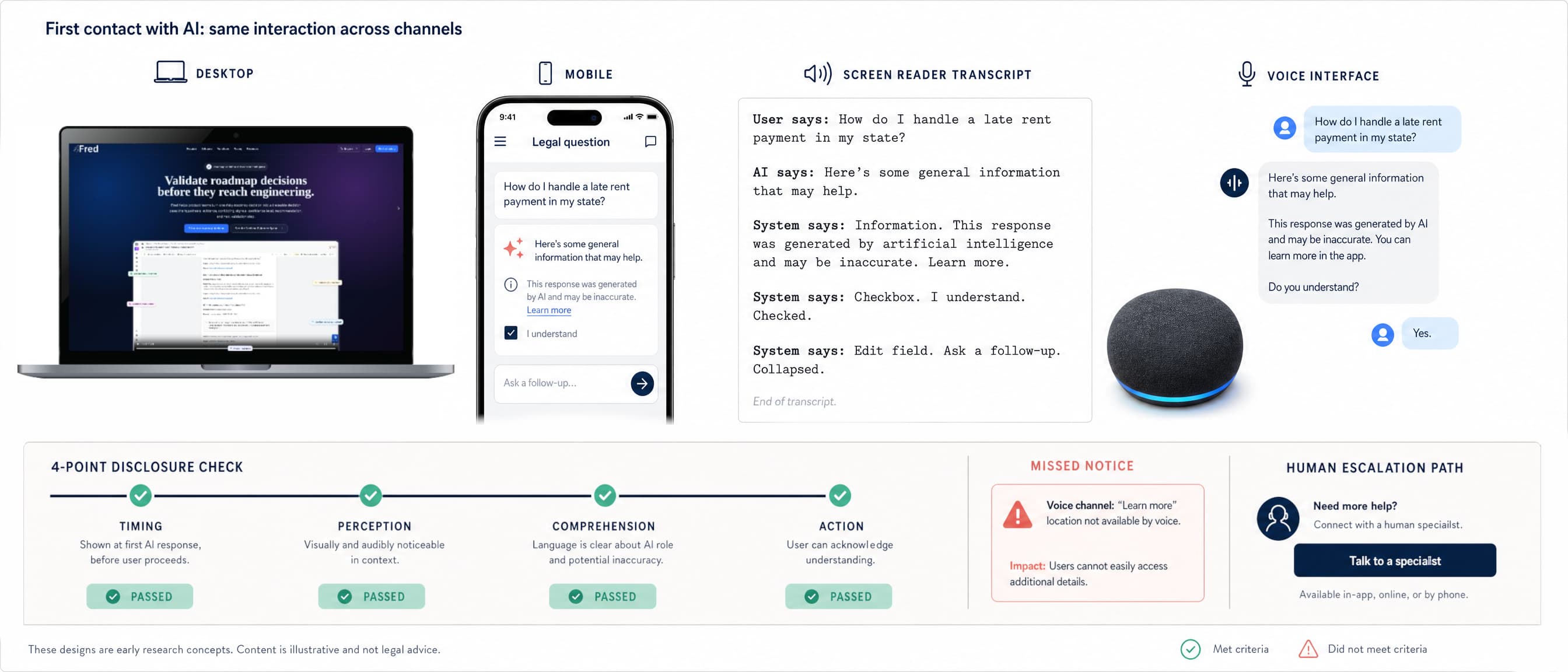
AI Act Article 50: Test Transparency at First Contact
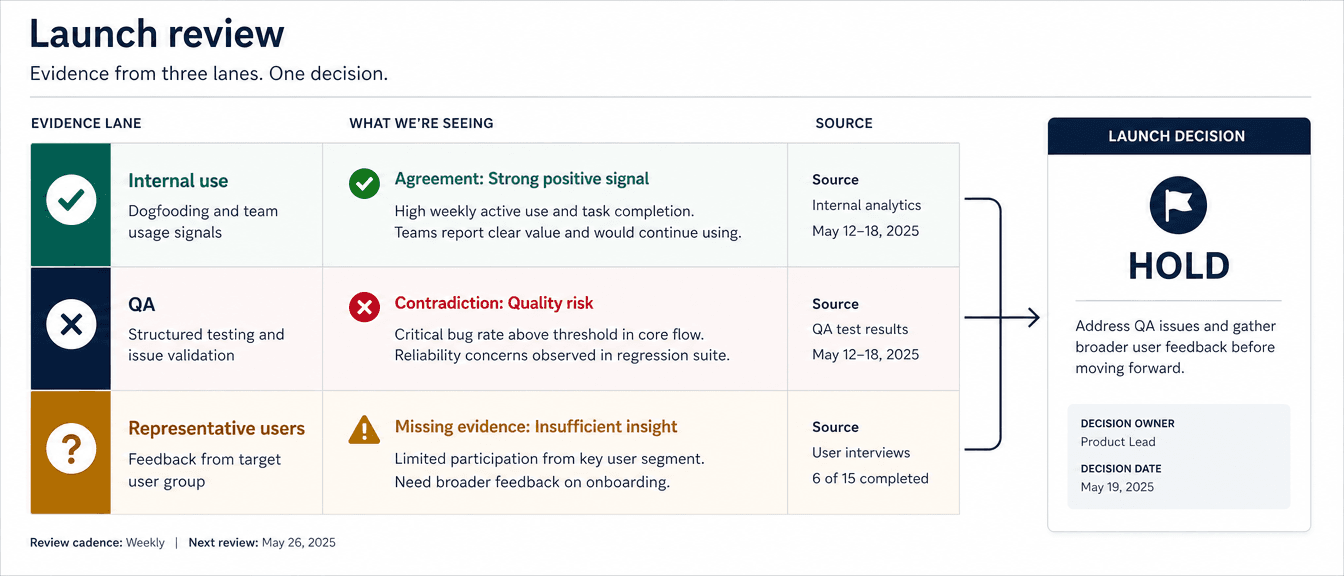
Turn AI Act Article 50 transparency into testable UX criteria for first contact, accessibility, comprehension, handoffs, and trust calibration.
Read guideResource category
Learn how to manage UX research operations, participant data, GDPR compliance, reporting, stakeholder communication, and scalable research workflows for product teams.
Guides in this category

Turn AI Act Article 50 transparency into testable UX criteria for first contact, accessibility, comprehension, handoffs, and trust calibration.
Read guide
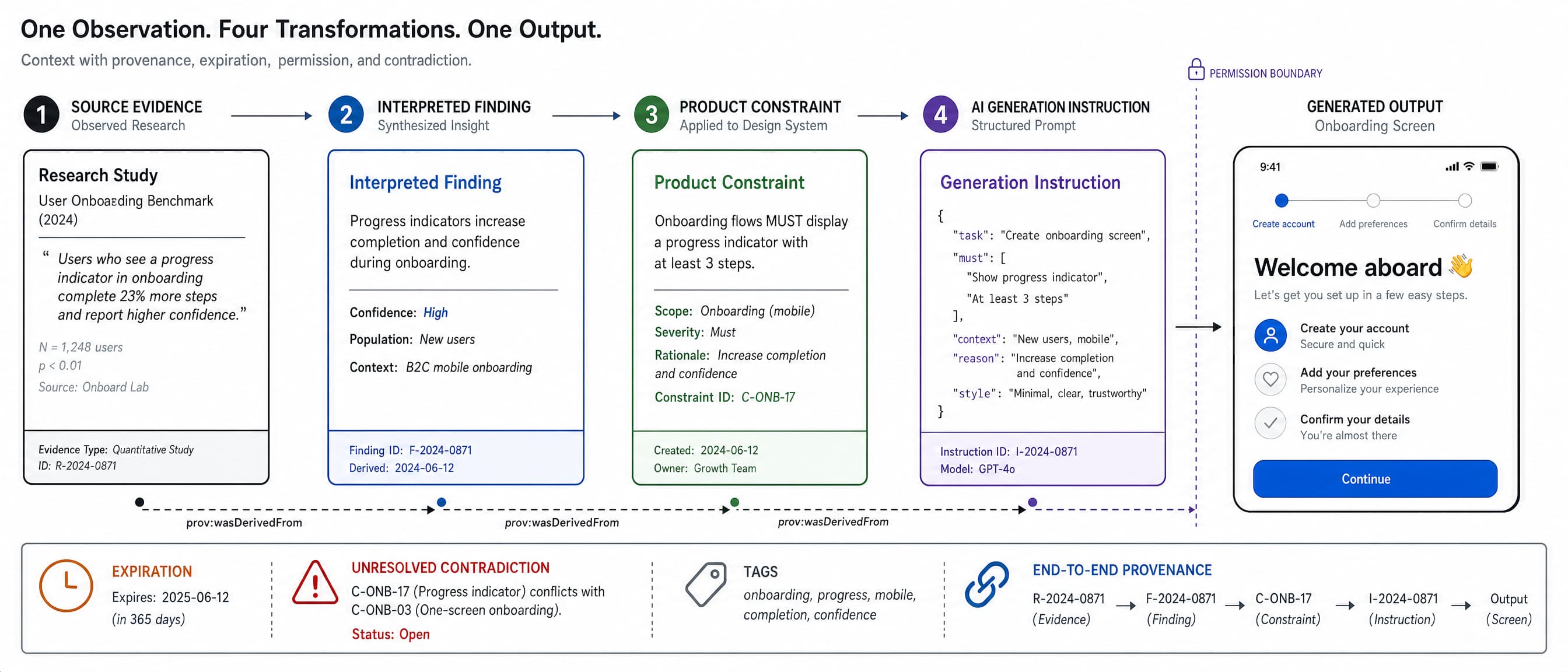
Learn how to turn research into bounded, traceable context for AI-generated product work while preserving evidence, uncertainty, permissions, and human review.
Read guide
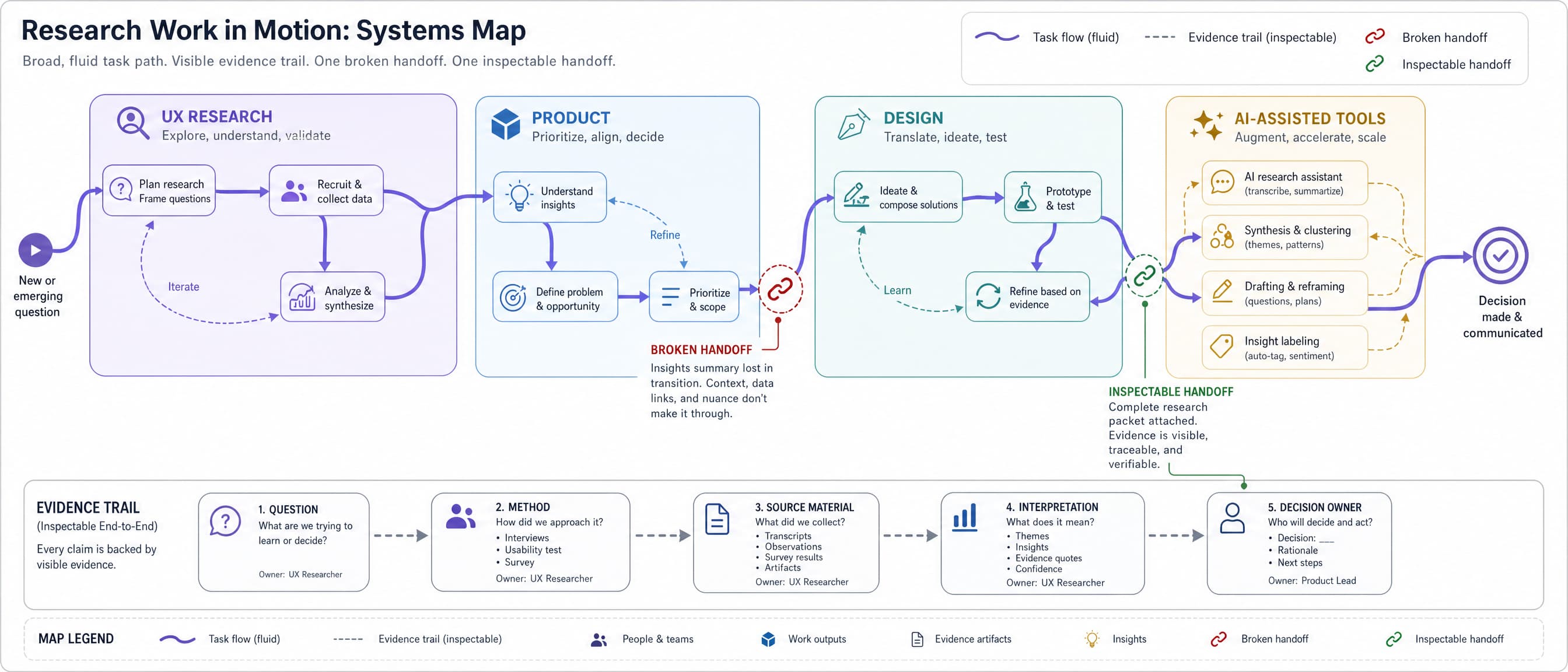
How to govern AI-enabled UX task crossover with explicit method, evidence, interpretation, reuse, and decision ownership.
Read guide
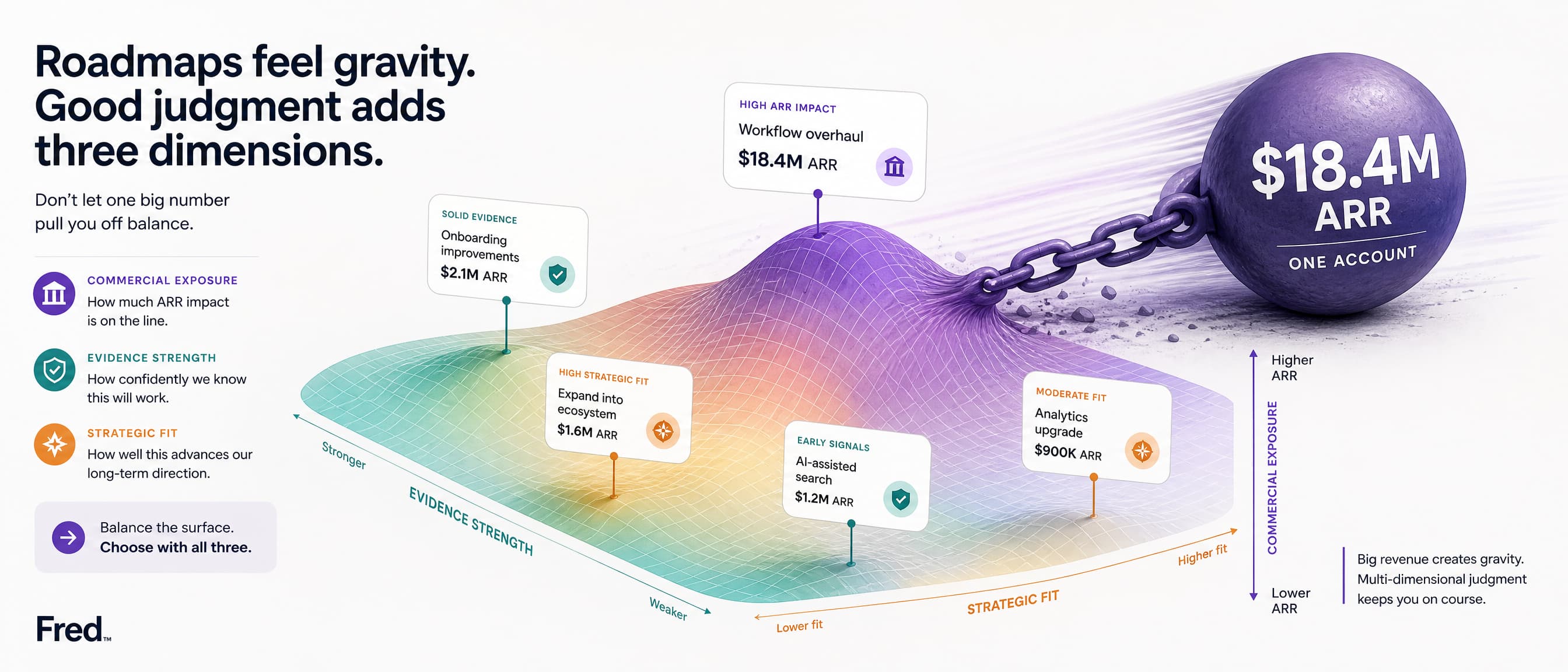
Learn how to use ARR in customer feedback prioritization without letting current revenue override evidence quality, strategic fit, or missing users.
Read guide
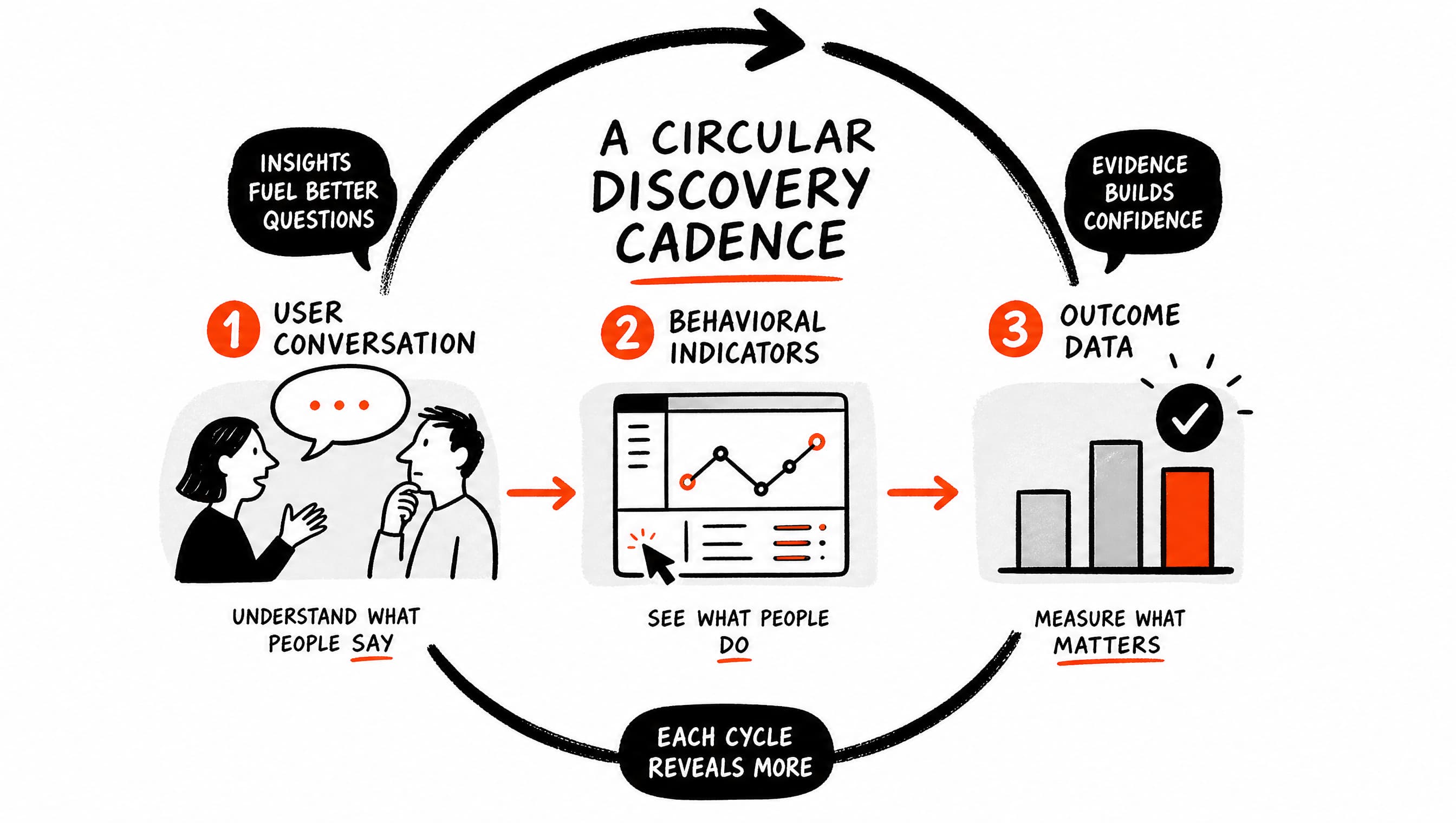
Continuous discovery improves learning, but frequency alone does not validate a decision. Learn how to connect recurring user contact to evidence thresholds, escalation decisions, and documented product choices.
Read guide
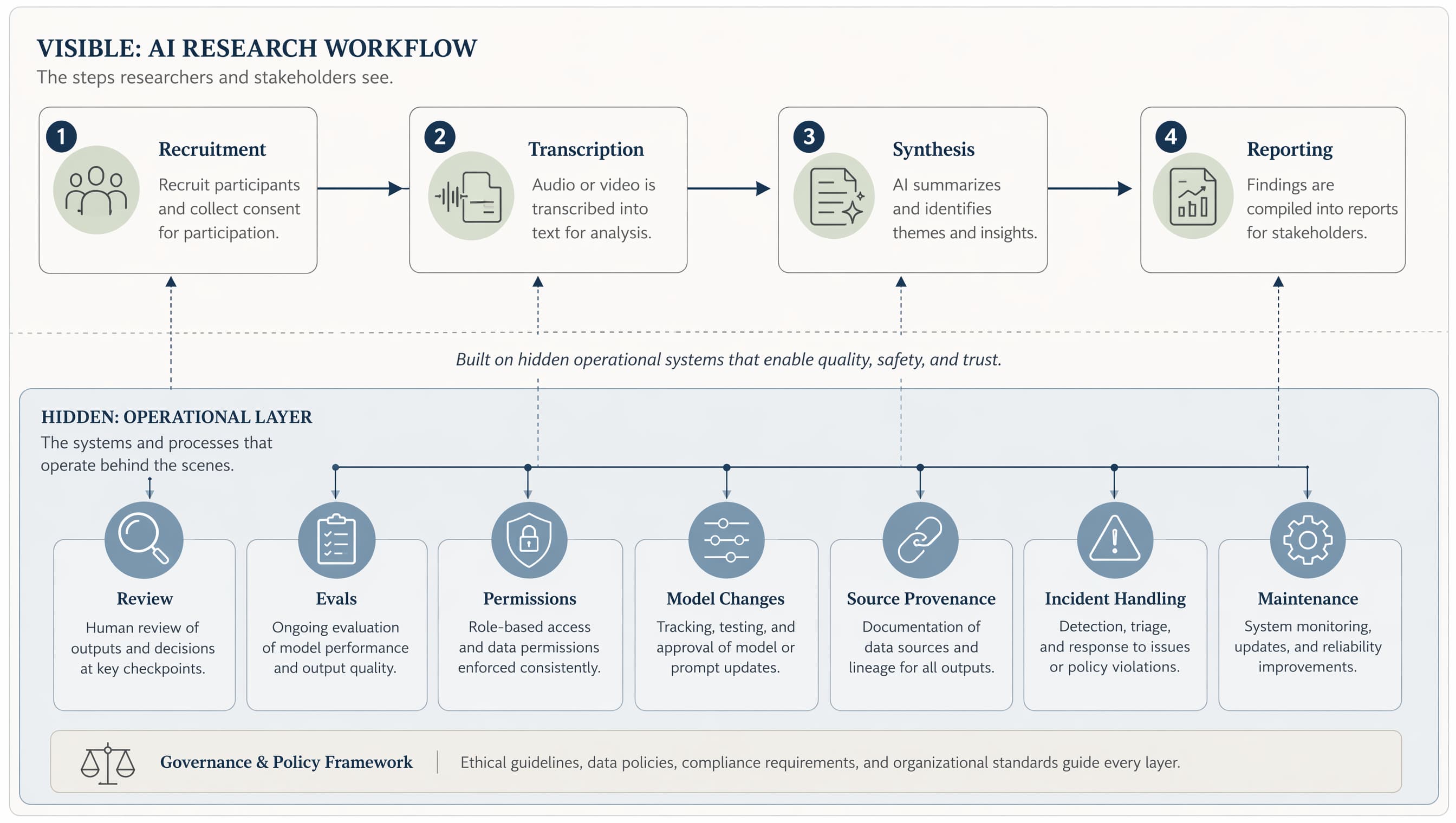
Learn how to measure and prevent AI operational debt in UX research with a net-value equation, readiness matrix, maturity model, role design, and 90-day plan.
Read guide
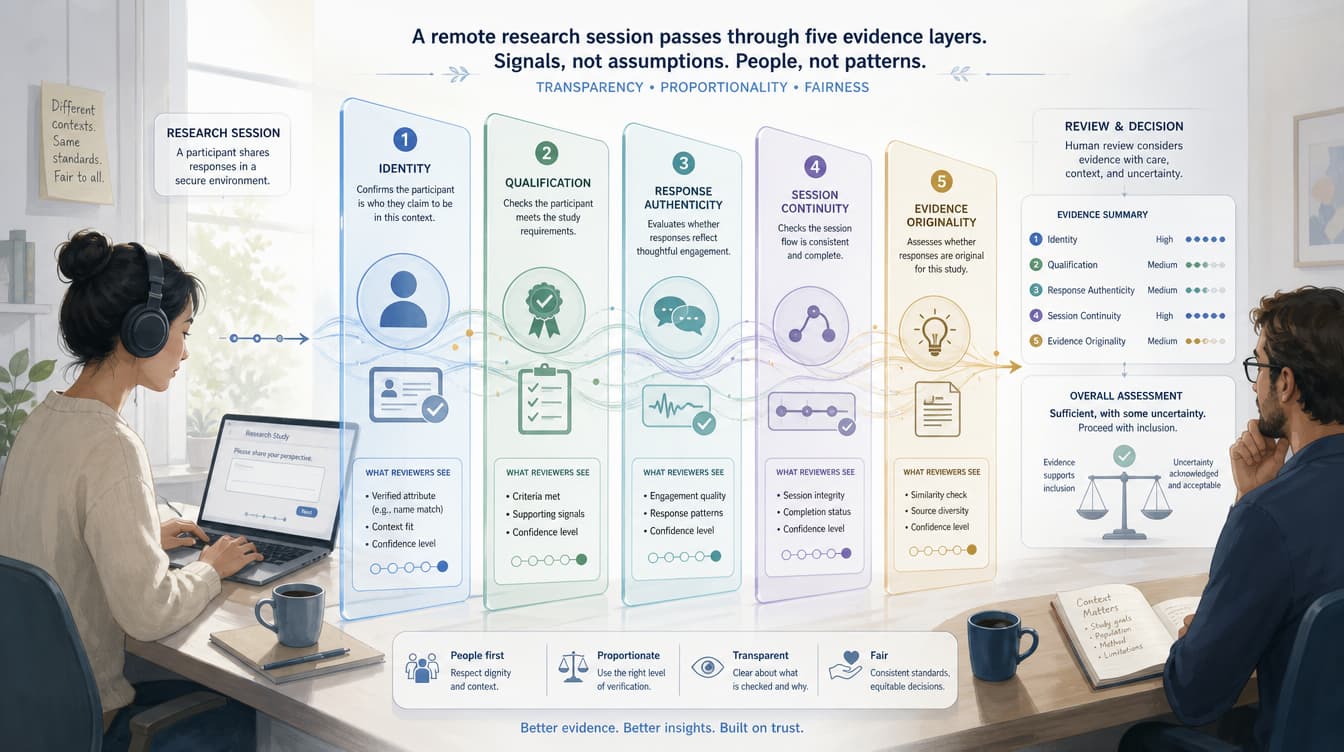
Learn how to detect AI-assisted participant fraud with a layered, auditable process that protects research quality without rejecting genuine users.
Read guide
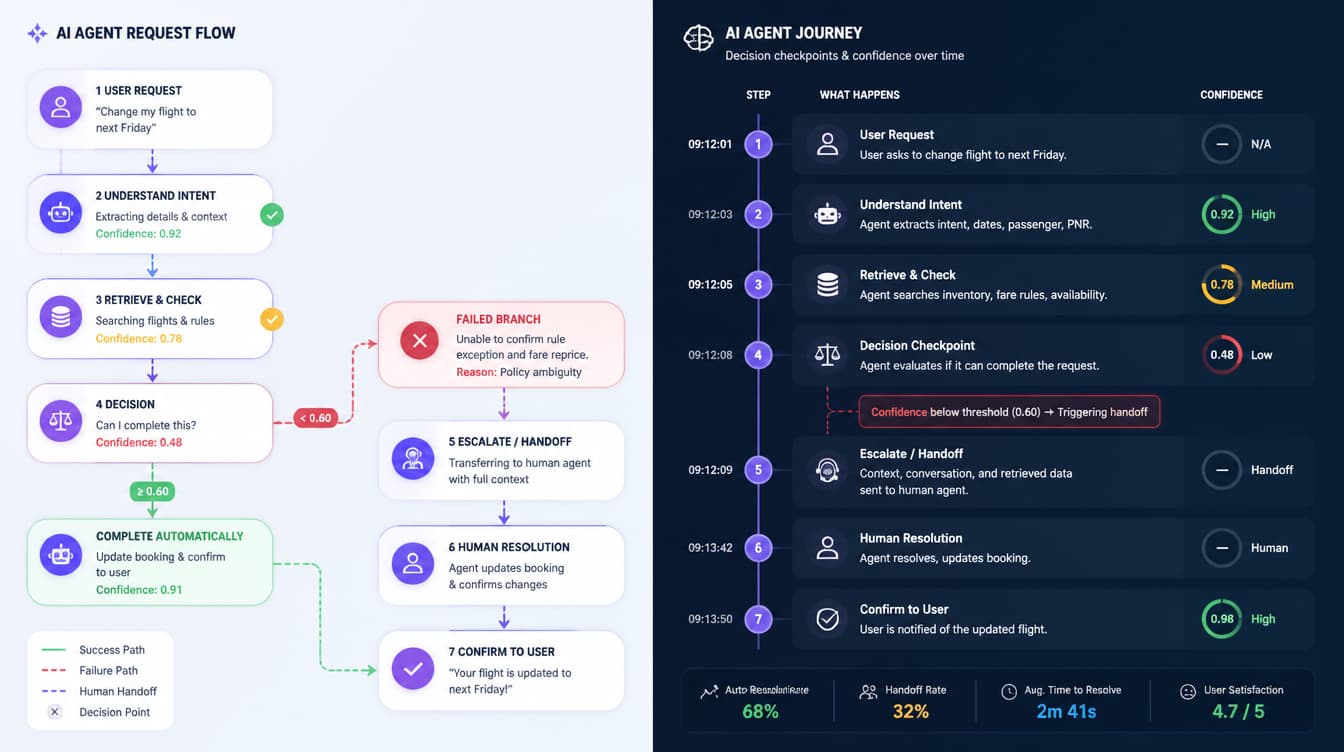
Learn how to usability test AI agents across handoffs, autonomy, transparency, failures, and cross-channel journeys, with a practical framework for real product teams.
Read guide
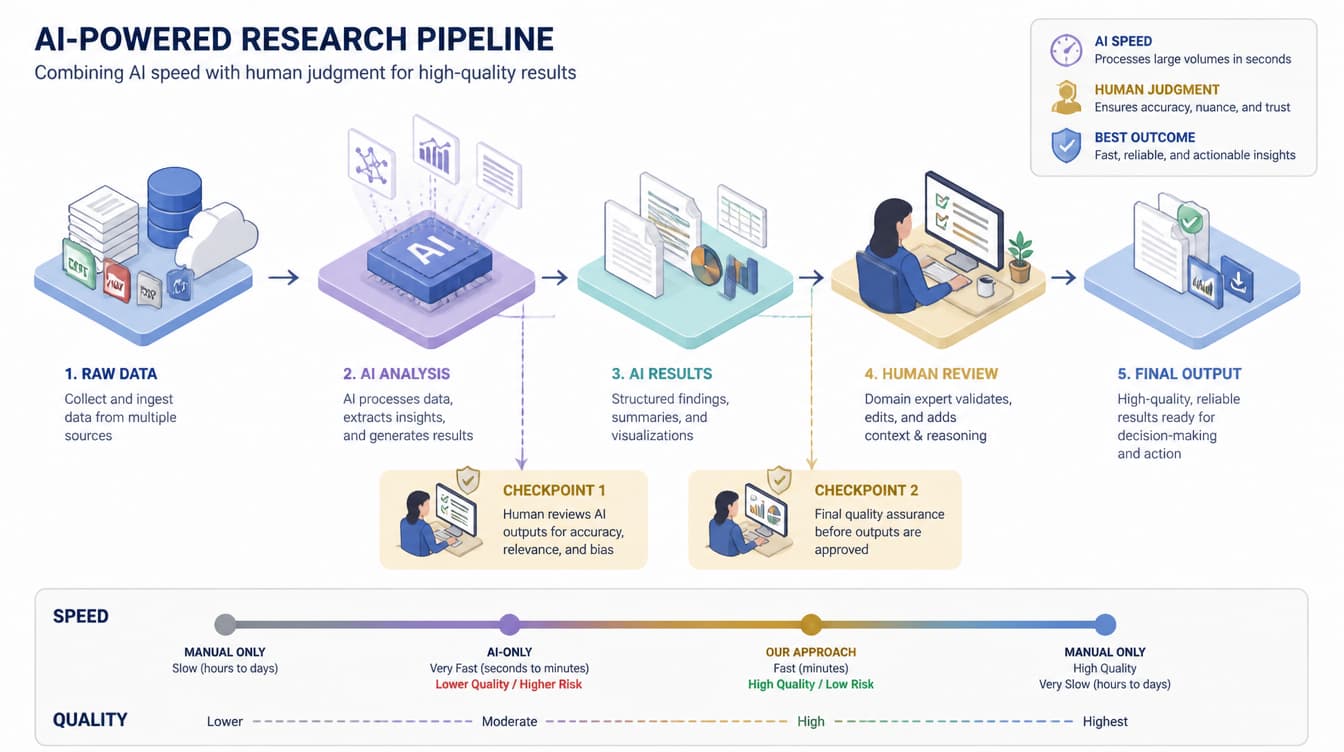
AI in UX research can accelerate the process, but weak pipelines create meaning drift. Learn how to evaluate AI-assisted research, protect evidence quality, and turn findings into decisions.
Read guide
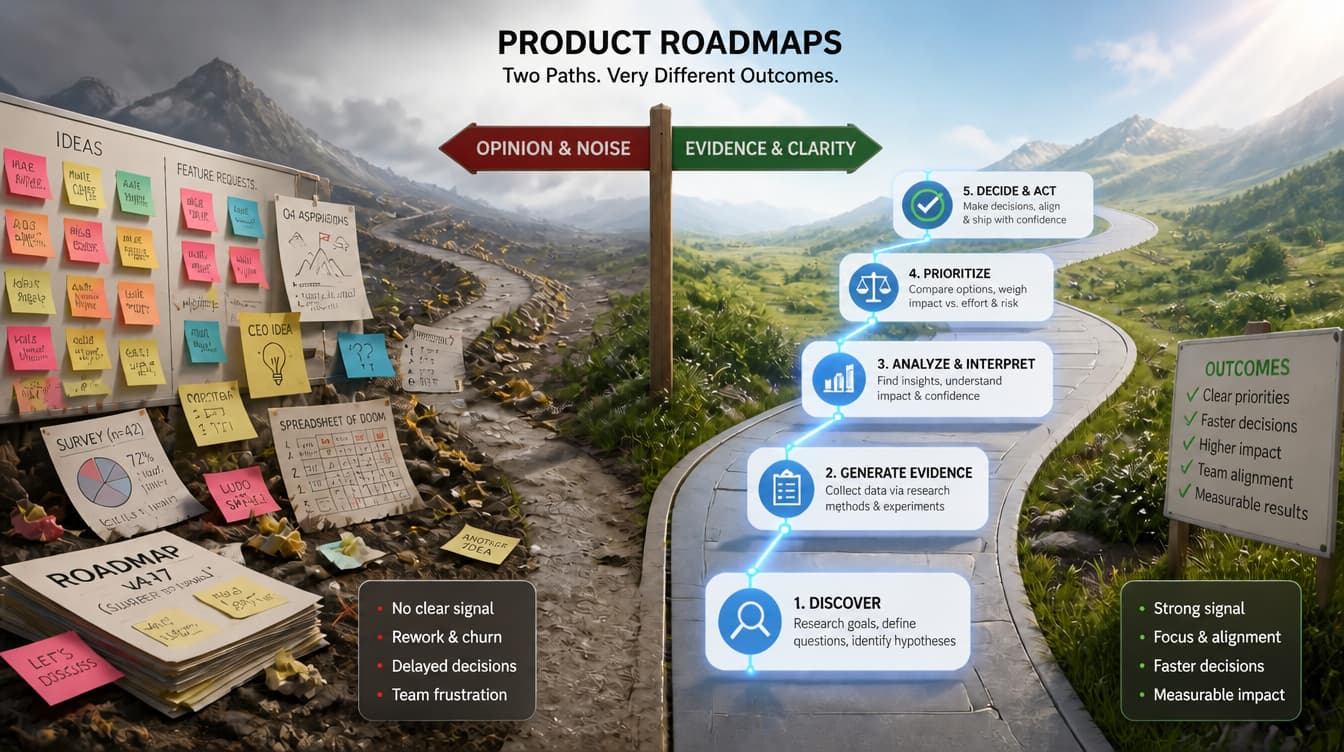
Product teams need more than scattered usability tests and survey results. Learn how roadmap validation connects user research, data quality, AI analysis, and decision intelligence.
Read guide
Turn research into decisions. How to win stakeholder buy-in by leading with business impact, translating findings into ROI language, and defending your method with confidence.
Read guide
What AI-powered UX research actually does, where it transforms the work, where it still fails, and how to evaluate AI research tools beyond the marketing claims.
Read guide
Learn how to build a UX research stack that connects methods, participant workflows, AI-assisted analysis, repositories, reporting, governance, and product decisions.
Read guide
Compare Maze, Dovetail, Hotjar, UserTesting, and Fred for B2B SaaS research workflows. Continuous discovery, prototype validation, and tool consolidation strategies.
Read guide
Compare SurveyMonkey, Typeform, Qualtrics, Google Forms, Hotjar, and Fred for UX research surveys. Real pricing, analysis capabilities, and integration trade-offs.
Read guide
For European product teams, GDPR is not a checkbox. It is a continuous obligation that shapes how every piece of user research is planned, executed, stored, and shared. The penalties for getting it wrong are not theoretical: Google has been fined €50 million for inadequate consen
Read guide
Compare Dovetail, Condens, Stravito, and Fred side by side. Find the best UX research repository for your team size, budget, and research workflow in 2026
Read guide
Compare the best UX research tools by workflow, method coverage, analysis, repositories, reporting, AI support, and compliance. Learn when to use specialist tools and when your team needs a research operating system.
Read guide
Understanding user needs and preferences is the cornerstone of exceptional User Experience (UX) design and development. Questionnaires emerge as a standout choice among the vast array of methods for gathering these crucial insights. Their ability to collect actionable data from u
Read guide
Discover how to bridge the collaboration gap in user research tools. Our article explores the challenges teams face in sharing user data across diverse platforms and introduces innovative solutions like Fred to enhance seamless collaboration and data integration.
Read guide
As data-driven insights become increasingly vital for successful product development, the significance of user research reaches unprecedented levels Organizations invest heavily in tools designed to gather user data and analyze it, often assuming that more tools equate to more in
Read guide