Find usability friction before it becomes product rework.
Fred helps teams run moderated and unmoderated tests, review AI-assisted reaction and prosody signals, use eye tracking for unmoderated sessions, and share findings that product, design, and engineering can inspect quickly.
AI-assisted reaction cues and related behavioral signals support research review. They should be read with source evidence and not treated as stand-alone factual determinations. Read the public AI transparency notice.
Usability risk
Usability findings get ignored when they are hard to inspect.
The team sees the issue, but not the exact evidence trail.
A summary of friction is easier to dismiss when PMs and engineers cannot inspect the task, behavior, reaction context, vocal cue, and participant context behind it.
Severity debates slow down implementation.
Teams need to know whether a problem is repeated, where it happens, and how it affects the task before they can prioritize a fix.
Reports arrive after the sprint decision.
Usability work has the most leverage when findings reach the team while design and engineering choices are still moveable.
Testing flow
Connect the task, observed behavior, reaction signals, and fix recommendation.
Fred makes usability testing useful beyond the session by preserving the chain from scenario setup to AI-assisted reaction, prosody, unmoderated gaze context, and source-backed recommendation.
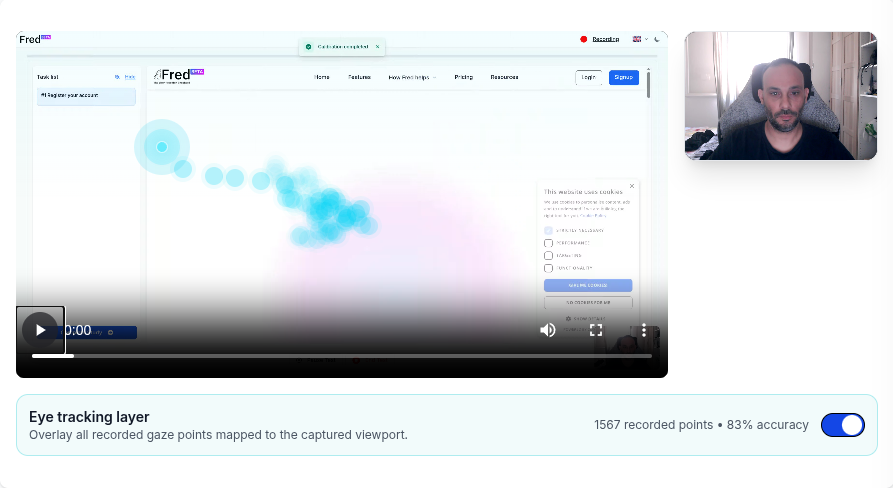
Explore the dedicated workflow for webcam eye tracking.
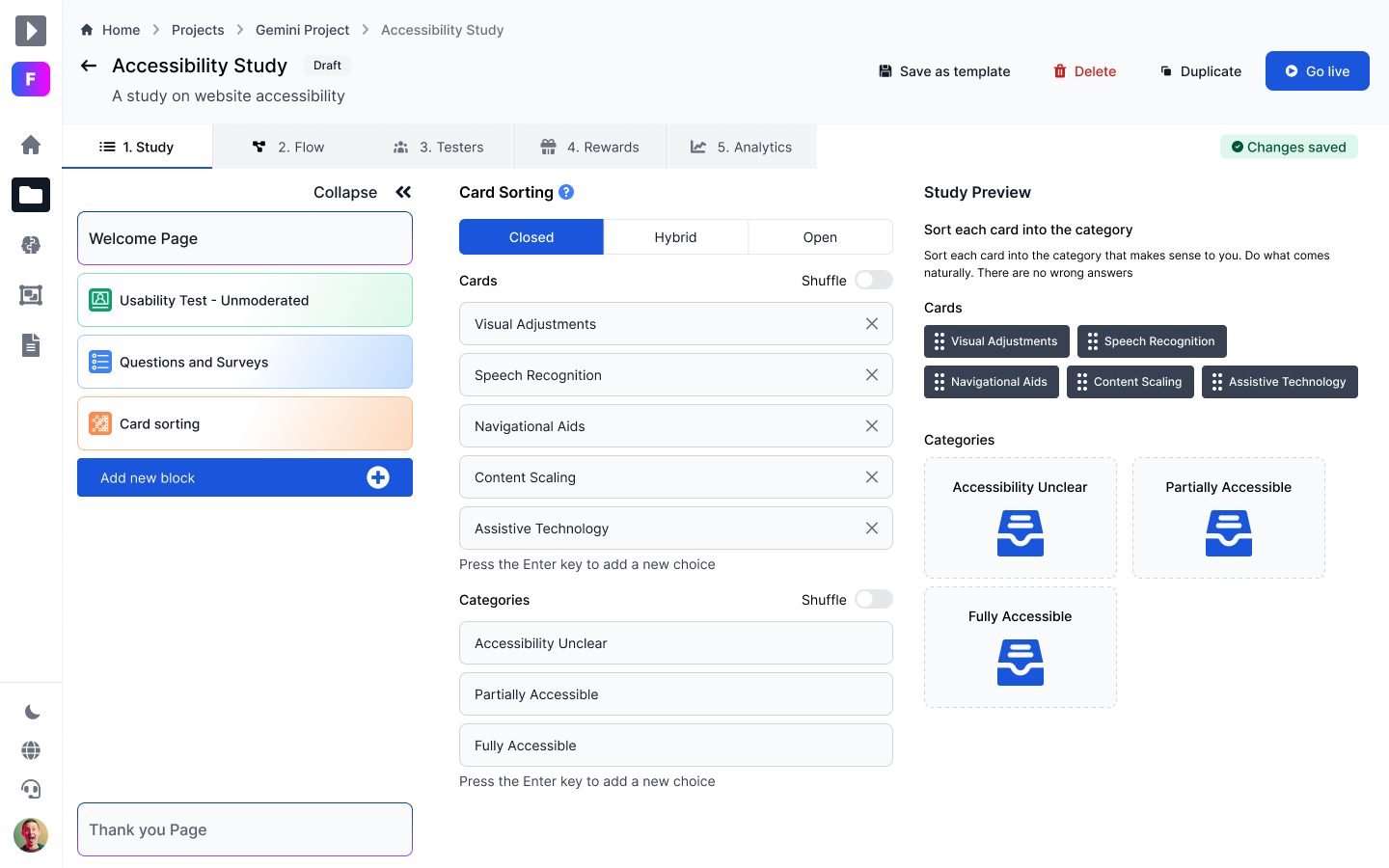
Task
Define scenarios around the UX decision.
Fred keeps success criteria, task context, and participant target visible before the session starts.
Behavior
Capture what users do and how they appear to react in context.
Recordings, task outcomes, clicks, pauses, responses, AI-assisted reaction cues, and prosody signals stay attached to the moment where friction appeared. For unmoderated usability tests, eye tracking adds gaze and attention context.
Fix
Share recommendations that implementation teams can inspect.
Findings move into reports with source links, so severity and priority can be reviewed without another reconstruction meeting.
Fix-ready evidence
The output should help the team decide what to fix first.
01
Usability findings remain tied to observed behavior and reaction signals.
Task outcomes, recordings, AI-assisted reaction cues, prosody signals, and participant context are linked.
02
Issue prioritization becomes clearer for implementation teams.
Reports surface recurring friction with accessible source evidence and, for unmoderated tests, eye-tracking context.
03
Testing and delivery cycles are more efficient.
Teams move faster from validation to fix-ready decisions.
Usability outcomes
Faster validation, clearer priority, less rework.
Usability testing should shorten the path from user behavior to product fix, not add another reporting bottleneck.
Find issues earlier
Detect friction before release and reduce costly rework.
Prioritize fixes by evidence
Tie severity and impact to observed behavior, reaction context, and vocal cues.
Improve team alignment
Give design, product, and engineering one shared view of issues.
Reduce reporting overhead
Generate shareable outputs without rebuilding the same story each sprint.
FAQ
Questions before running usability tests in Fred.
Test before rework
Turn usability evidence into faster product fixes.
Run the next usability study with task-level evidence, AI-assisted reaction and prosody signals, source links, and fix-ready reporting in one workflow.