Make past research usable at the next roadmap decision.
Fred turns studies, sessions, findings, and report context into searchable research memory, so teams can build on evidence instead of rediscovering it every cycle.
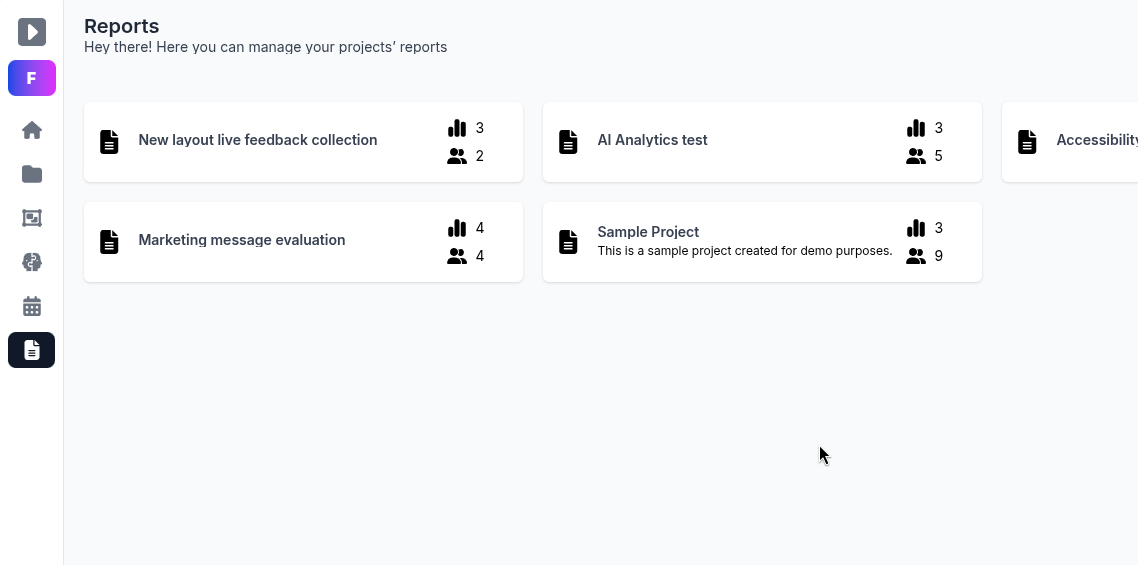
Research memory risk
Research loses value when evidence becomes an archive.
Stored does not mean usable.
Research can technically exist in folders, decks, clips, and notes while still being too slow to retrieve during a planning conversation.
Old context disappears first.
The finding may be remembered, but the study objective, audience, source clip, and decision that followed often fall away.
The next team repeats the work.
When prior evidence is hard to inspect, teams rerun discovery or reopen old debates instead of building from what they already know.
Repository workflow
A repository should change the next decision, not just the filing system.
Fred keeps evidence operational after a study closes. The team can retrieve what was learned, inspect why it was trusted, and reuse it without rebuilding the whole trail.
Collect
Keep studies, sessions, and findings in one research space.
Fred keeps the raw material close to the context that made it meaningful: project, audience, task, source, and report.
Retrieve
Find relevant evidence before a new decision starts from zero.
Search is valuable when it brings back the right study, quote, clip, or pattern while the team is still shaping the decision.
Reuse
Carry source-backed learning into synthesis and reports.
Prior evidence can feed the next review without becoming a loose claim detached from the source trail.
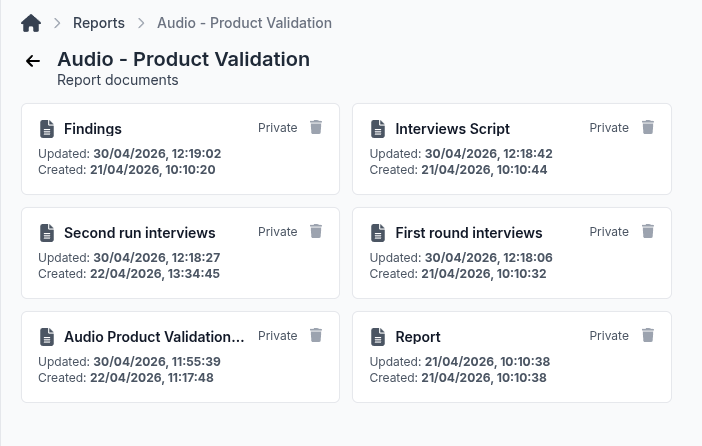
Decision continuity
Institutional memory should live in the workflow, not in someone's head.
The repository gives future teams a way to understand what was learned, where it came from, and how it shaped previous product decisions.
01
Search becomes useful
Teams can actually retrieve relevant studies, quotes, and findings when the next question appears.
02
Knowledge compounds
Past studies become assets for new discovery, validation, and reporting work.
03
Institutional memory strengthens
Evidence survives team changes because context lives in the product, not in someone's head.
What teams get back
Less duplicated research, stronger continuity, cleaner reports.
Repository value compounds when old evidence is easy to find, compare, and carry forward into the next planning cycle.
Faster retrieval
Find relevant prior work before the team commits to duplicating it.
Cross-project context
Compare related evidence across studies and timeframes with less manual effort.
Better strategic continuity
Carry patterns forward instead of relying on fragmented institutional memory.
Report-ready reuse
Bring prior evidence into new reporting and stakeholder discussions with the source trail intact.
Build lasting research memory
Turn past studies into an evidence base the whole team can use.
Keep research searchable, source-backed, and ready for the next product decision.