Validate design direction before rework reaches engineering.
Fred helps designers test concepts, prototypes, and flows while keeping every recommendation attached to user behavior.
At a glance
How product designers use Fred
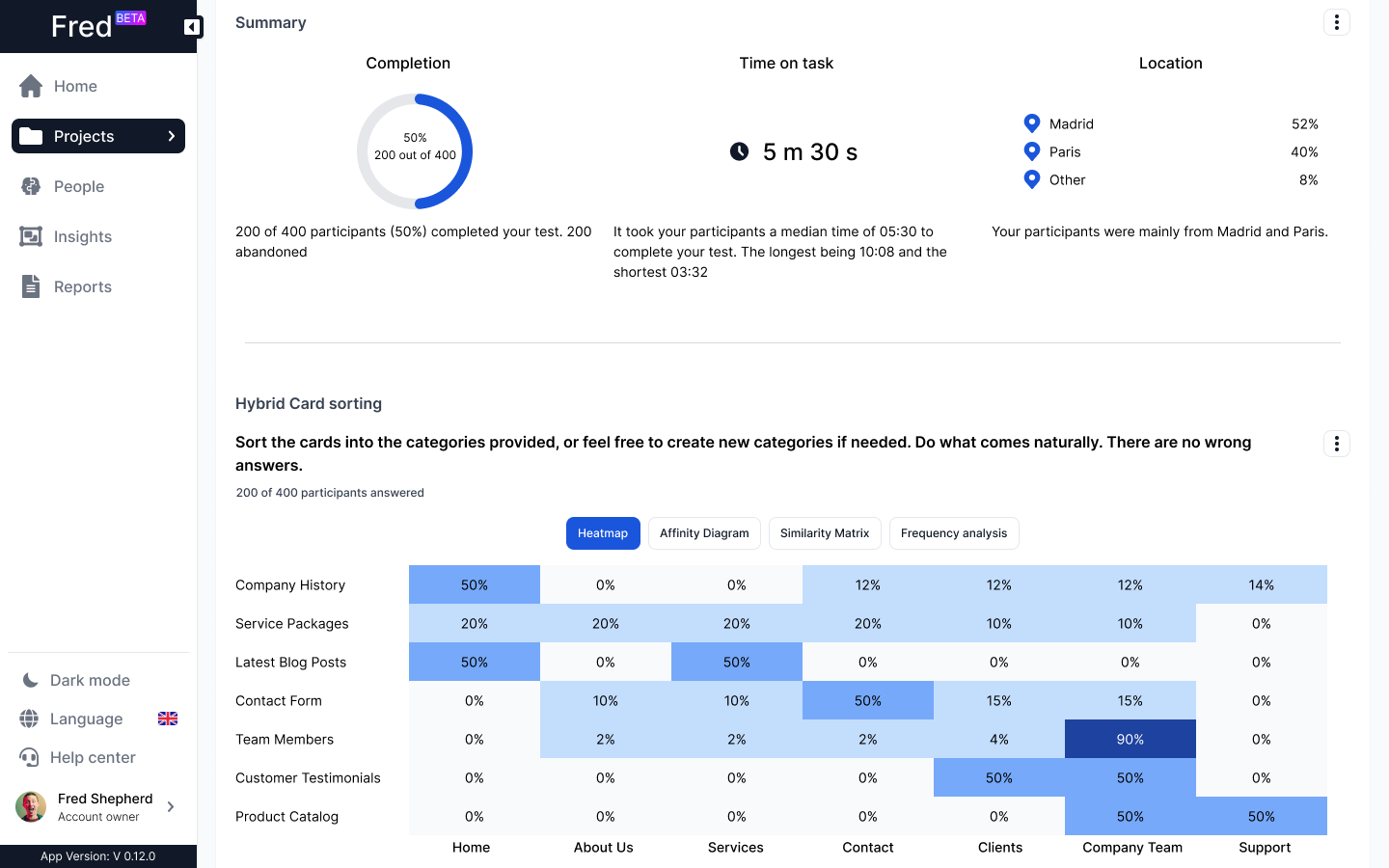
For product designers, Fred turns design validation into an evidence trail that can survive critique, handoff, and prioritization. Designers use Fred to test concepts, Figma prototypes, flows, labels, and task paths, then connect participant responses, observed behavior, heatmaps, and report recommendations to the design decision. The page is not about proving every design choice automatically; it is about reducing rework by making the rationale visible before engineering work begins and by giving PMs, researchers, and engineers the same source material to inspect.
Before handoff
Validate concepts, flows, labels, and task paths before engineering work absorbs the uncertainty.
Prototype evidence
Keep observed behavior, responses, and heatmaps connected to the design question.
Shared rationale
Give PMs, researchers, and engineers the same source evidence behind the recommendation.
Design review risk
Design decisions need a source of truth before critique starts.
Reviews turn into preference debates.
Without user evidence, critique can drift toward taste, hierarchy, or the loudest room opinion.
The design changes, but the rationale does not travel.
PMs and engineers see the output, not the user behavior that shaped the decision.
Rework shows up after engineering starts.
The expensive moment is not the design change. It is discovering the change after implementation begins.
Design validation loop
Move from concept risk to evidence-backed handoff.
Fred keeps the design question, test method, participant evidence, and report connected, so the rationale survives every review.
Concept
Test direction before fidelity creates attachment.
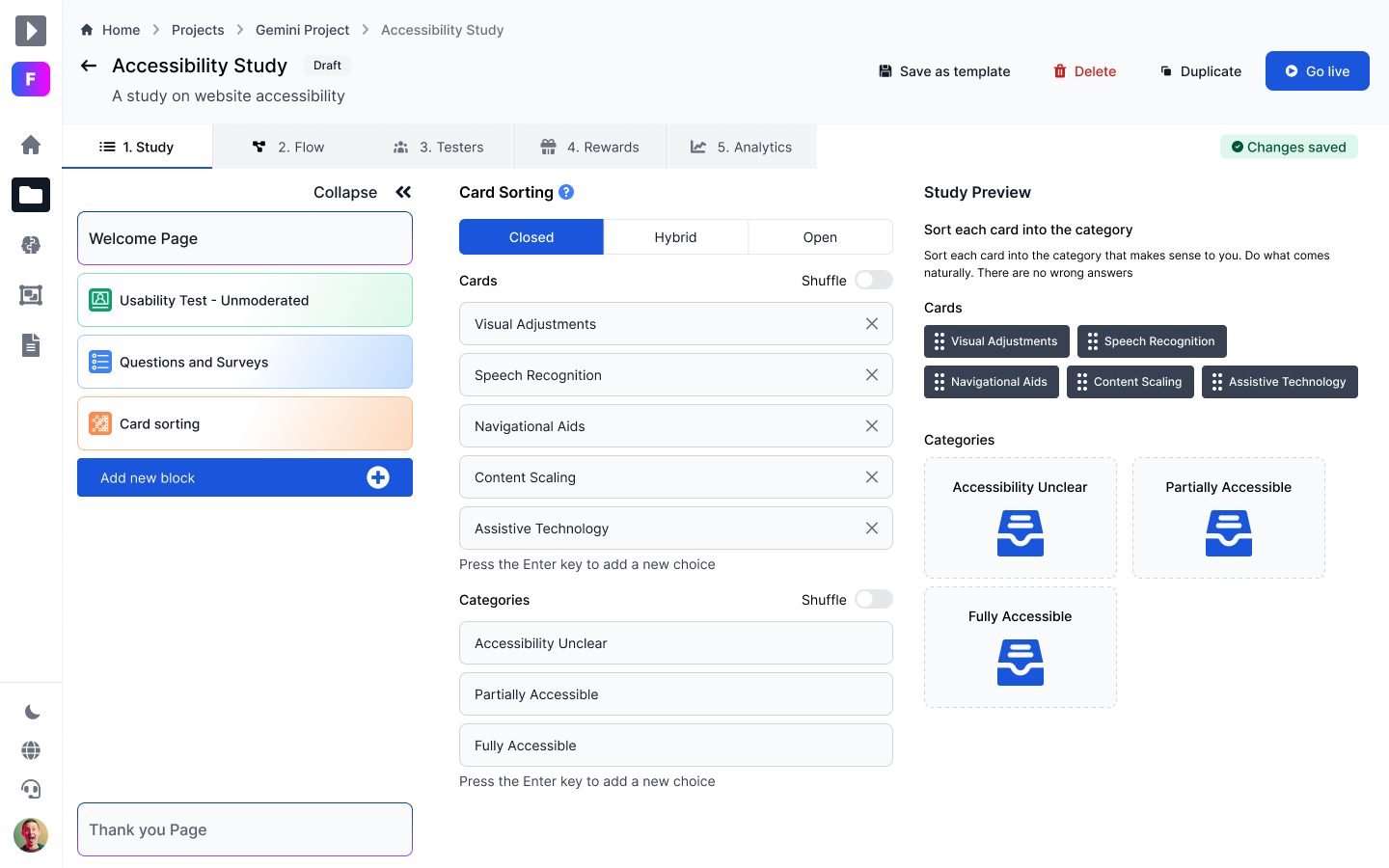
Use preference, 5-second, survey, or first-click methods to reduce uncertainty around early concepts.
Flow
Find friction before it becomes engineering cost.
Run usability tasks and keep friction points tied to the exact task and screen where they happened.
Evidence
Keep the why visible in critique.
Findings stay linked to participant context, responses, and observed behavior.
Handoff
Share decisions with proof attached.
Reports give PMs and engineers the rationale behind the design direction, not just a summary.
Cross-functional handoff
PM and engineering should see the reason, not just the screen.
01
Design recommendations stay tied to observed behavior.
Task-level findings and responses remain linked for review discussions.
02
Prototype testing and reporting are connected.
Outputs can be shared without recreating context in external decks.
03
Cross-functional teams can inspect the same evidence.
Design, product, and engineering align around one evidence model.
Designer outcomes
More confidence in review, less rework after handoff.
Fred turns design validation into a reusable evidence trail for critiques, roadmap syncs, and future iterations.
Faster validation cycles
Move from concept to validated direction without jumping across tools.
Higher review confidence
Bring evidence-backed rationale to critiques and roadmap syncs.
Better collaboration
Keep designers, PMs, and researchers aligned on a shared evidence base.
Reusable insights
Reuse prior findings for future iterations instead of restarting discovery.
FAQ
Questions before validating the next design.
Start with one design decision
Validate the next direction before it becomes expensive.
Start your next validation cycle with a workflow built for fast, defensible design decisions.