Research should not end with findings. It should end with a decision case.
Fred keeps studies, participant evidence, AI-assisted synthesis, and reports connected so researchers can turn findings into decisions stakeholders can inspect, trust, and use.
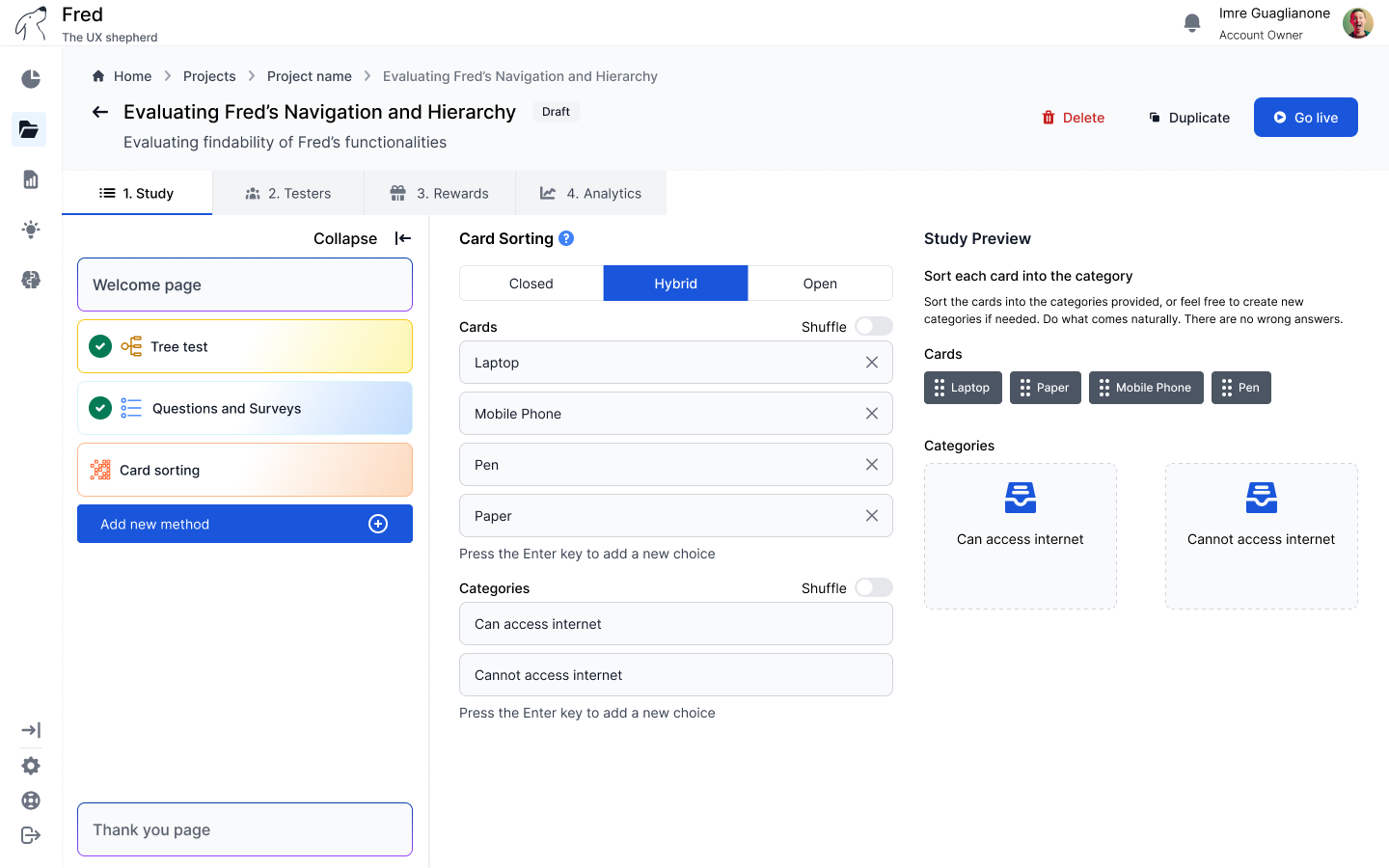
Research influence
Protect the value of research after the findings are written.
Fred helps researchers preserve the source path from evidence to recommendation, so insights do not become detached opinions when they reach roadmap, design, or leadership conversations.
Evidence gets separated from the claim.
Recordings, notes, clips, survey responses, and report drafts move through different places before the decision meeting happens.
Synthesis becomes an operations project.
The team spends too much time reconstructing context and too little time improving the quality of the recommendation.
Stakeholders challenge the conclusion.
When the source path is not visible, research is easier to treat as opinion instead of decision-grade evidence.
Evidence chain
One research workflow from objective to decision report.
Fred gives researchers speed without asking them to give up rigor. AI can draft and organize, but final claims stay tied to source evidence and researcher review.
01
Define the decision and study objective before launch.
02
Collect sessions, responses, notes, and participant context in one project.
03
Use AI-assisted synthesis as a draft, then keep researcher review in control.
04
Publish reports where every recommendation can be inspected at the source.
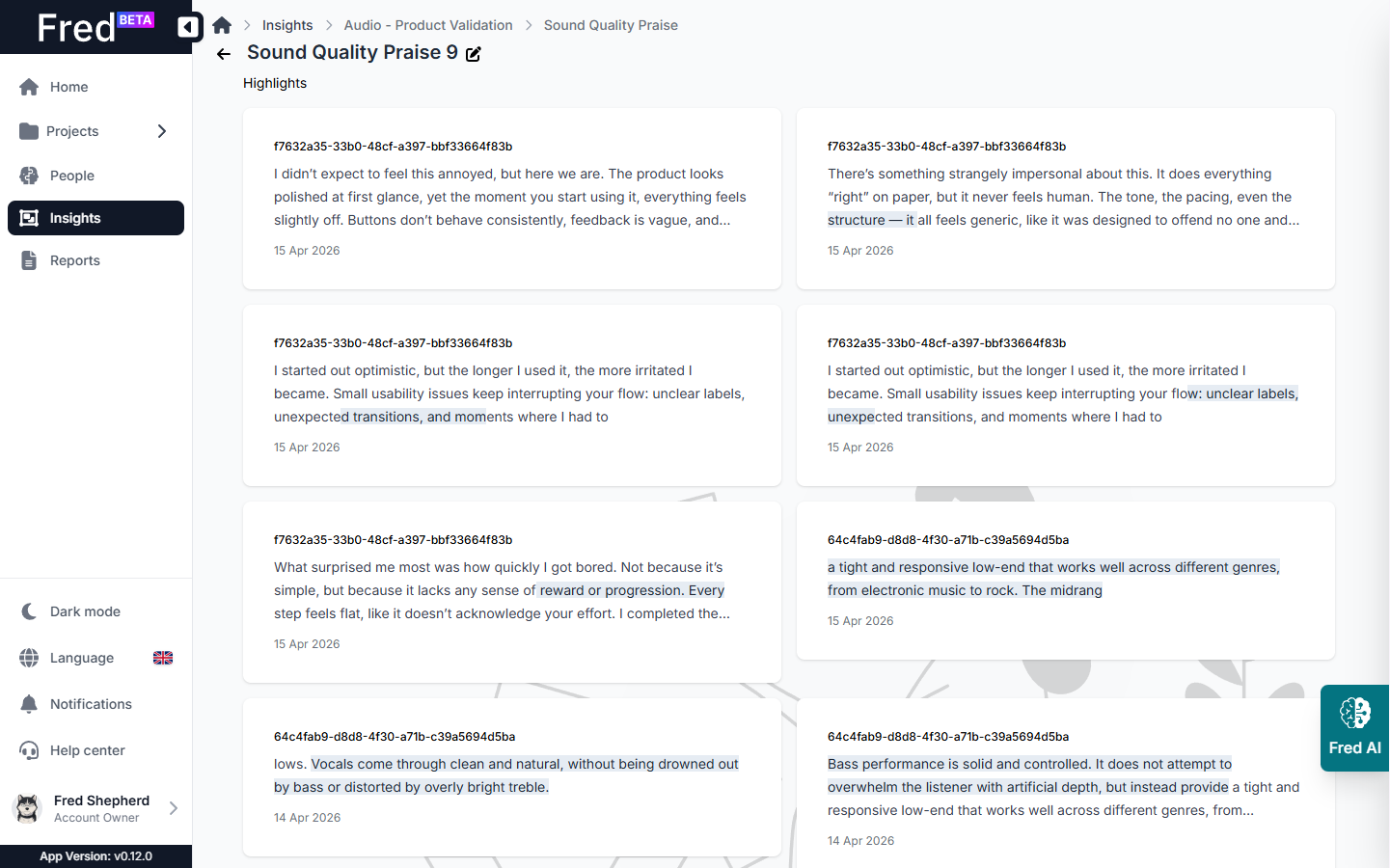
Researcher control
Faster synthesis should still feel like your research.
Fred helps draft themes, organize evidence, and prepare reports. The researcher keeps judgment, edits, and final approval.
01
Every recommendation traces back to source evidence
Clips, responses, and participant context stay connected across the full research cycle.
02
AI assistance stays under researcher control
AI-assisted drafts give researchers a head start. The researcher approves every final conclusion.
03
Reports are built for decision rooms, not archives
One link keeps findings, confidence, limitations, and source evidence inspectable.
Research outcomes
The output is built for decision rooms, not archives.
Reports should help stakeholders understand what was learned, why it matters, and which source evidence supports the claim.
Reduce time-to-insight
Move from completed sessions to shareable findings in hours, not days.
Defend decisions clearly
Show direct evidence behind each recommendation during roadmap and design reviews.
Build reusable research memory
Find and reuse prior studies instead of restarting analysis every sprint.
Align teams faster
Share one report link with PMs, designers, and engineers to remove interpretation gaps.
FAQ
Questions before moving research into Fred.
Start with one study
Turn your next study into a decision-ready report.
Keep studies, evidence, AI-assisted synthesis, and researcher review connected through the recommendation.