Synthesize qualitative evidence faster, without losing rigor.
Fred helps teams draft, refine, and validate themes while keeping the source evidence close enough for researchers and stakeholders to trust the final readout.
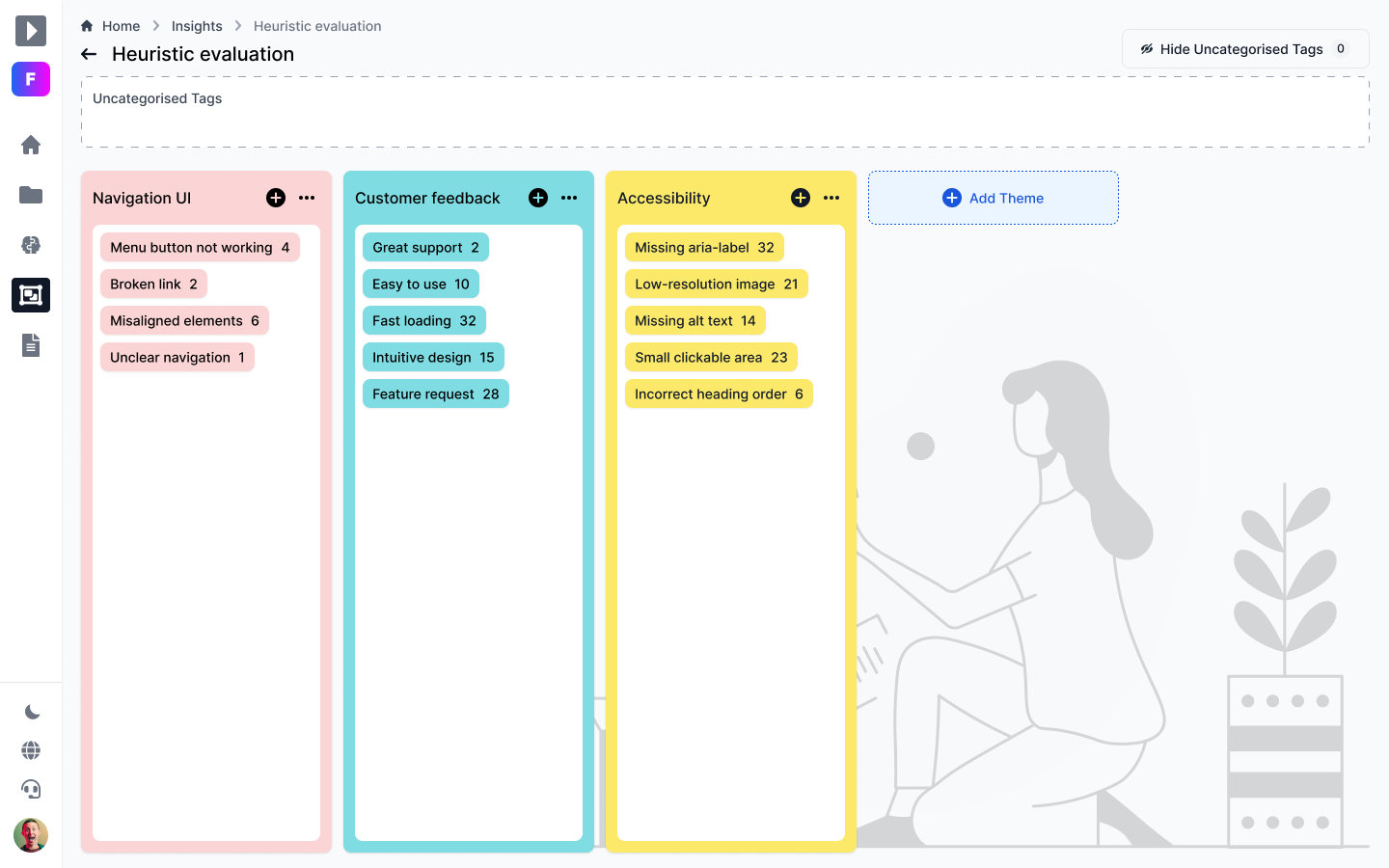
Synthesis risk
Qualitative themes lose trust when no one can audit how they formed.
A fast cluster is not automatically a reliable theme.
Teams need to inspect the quotes, sessions, and participant context beneath each suggested pattern before it becomes a recommendation.
Opaque AI output creates review debt.
If the team cannot understand how a theme was formed, the saved synthesis time gets spent defending the analysis later.
Patterns vanish after one report.
Qualitative work becomes more valuable when recurring themes can survive across studies instead of resetting every cycle.
Researcher-controlled synthesis
Let AI accelerate the first pass, then keep judgment in the room.
The value is not automatic clustering by itself. The value is a transparent workflow where every theme can be questioned, refined, and traced back to the evidence.
Draft
Start from a structured first pass.
AI assistance helps organize transcripts, notes, and sessions into draft themes without pretending the draft is final truth.
Review
Inspect source evidence before a theme survives.
Researchers can challenge, rename, merge, split, or reject themes while keeping the underlying evidence visible.
Carry
Move validated patterns into reports and research memory.
The final synthesis stays useful because the team can reuse the theme and still inspect the sources behind it.
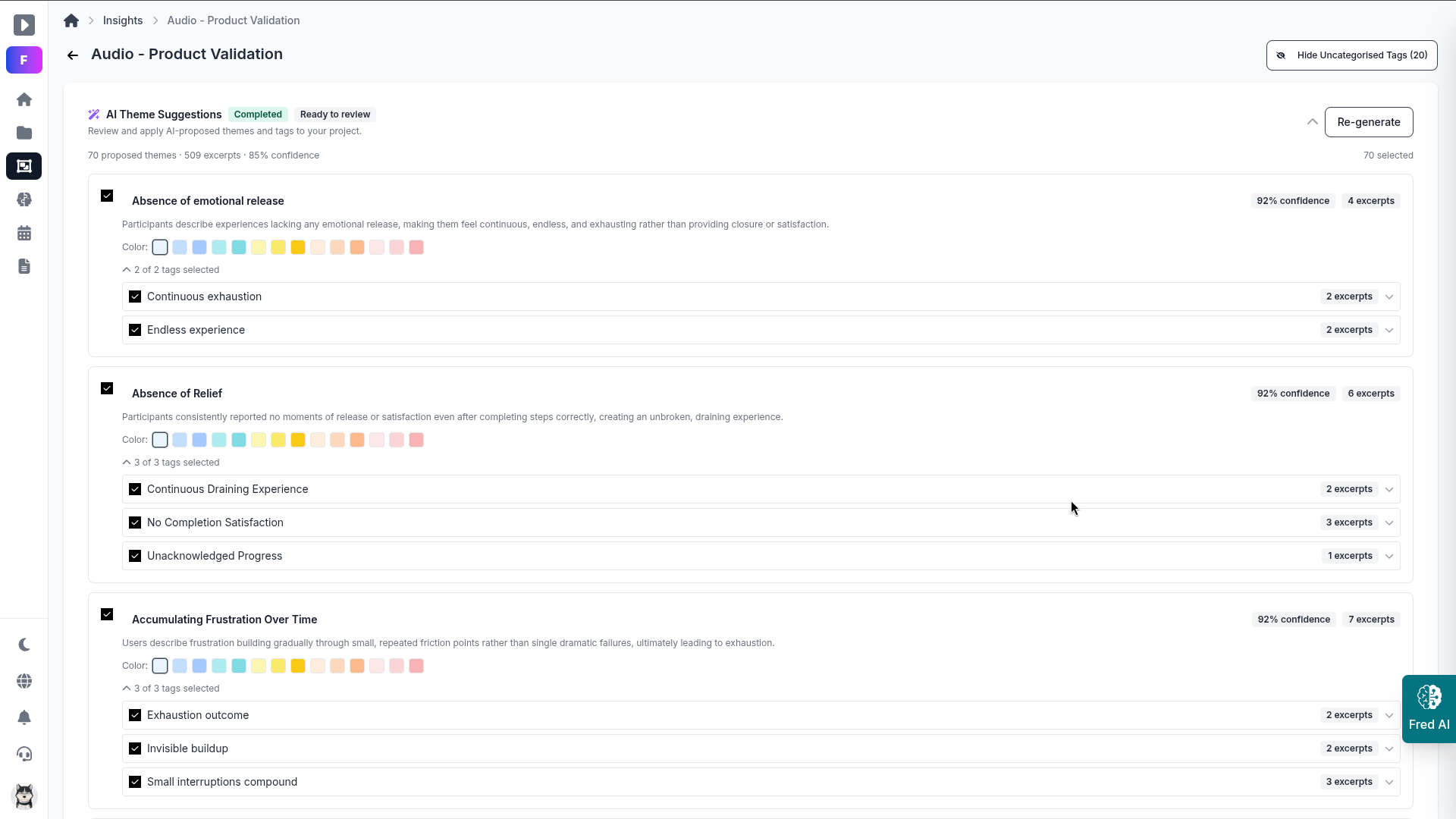
Traceable acceleration
Speed is only useful when the readout remains defensible.
Fred keeps AI drafts editable and source-linked, so the team can reduce synthesis drag without weakening the credibility of the final recommendation.
01
Editable AI drafts
Researchers can rename, merge, split, or reject suggested themes before anything is shared.
02
Evidence-linked themes
Each theme keeps a visible connection to the quotes and sessions that support it.
03
Reusable pattern memory
Teams can carry recurring themes across studies instead of restarting from zero.
What teams get back
Faster synthesis with better auditability.
The team moves from raw qualitative material to a shareable readout faster, while keeping enough evidence visible to defend the work.
Cleaner review loops
Teams challenge and refine themes faster when the supporting evidence is close at hand.
Higher trust
AI assistance stays acceptable because researchers still control the final output.
Cross-study continuity
Recurring themes become easier to compare across projects and timeframes.
Faster handoff
Validated themes move into reports without losing the evidence behind them.
Scale qualitative synthesis
Use AI-assisted analysis that stays editable, inspectable, and defensible.
Bring the first pass, source review, and final report into one synthesis workflow.