Recruit the right participants before the decision window closes.
Fred brings participant sourcing, screening, segment context, and study evidence into one flow, so research can move quickly without weakening audience fit.
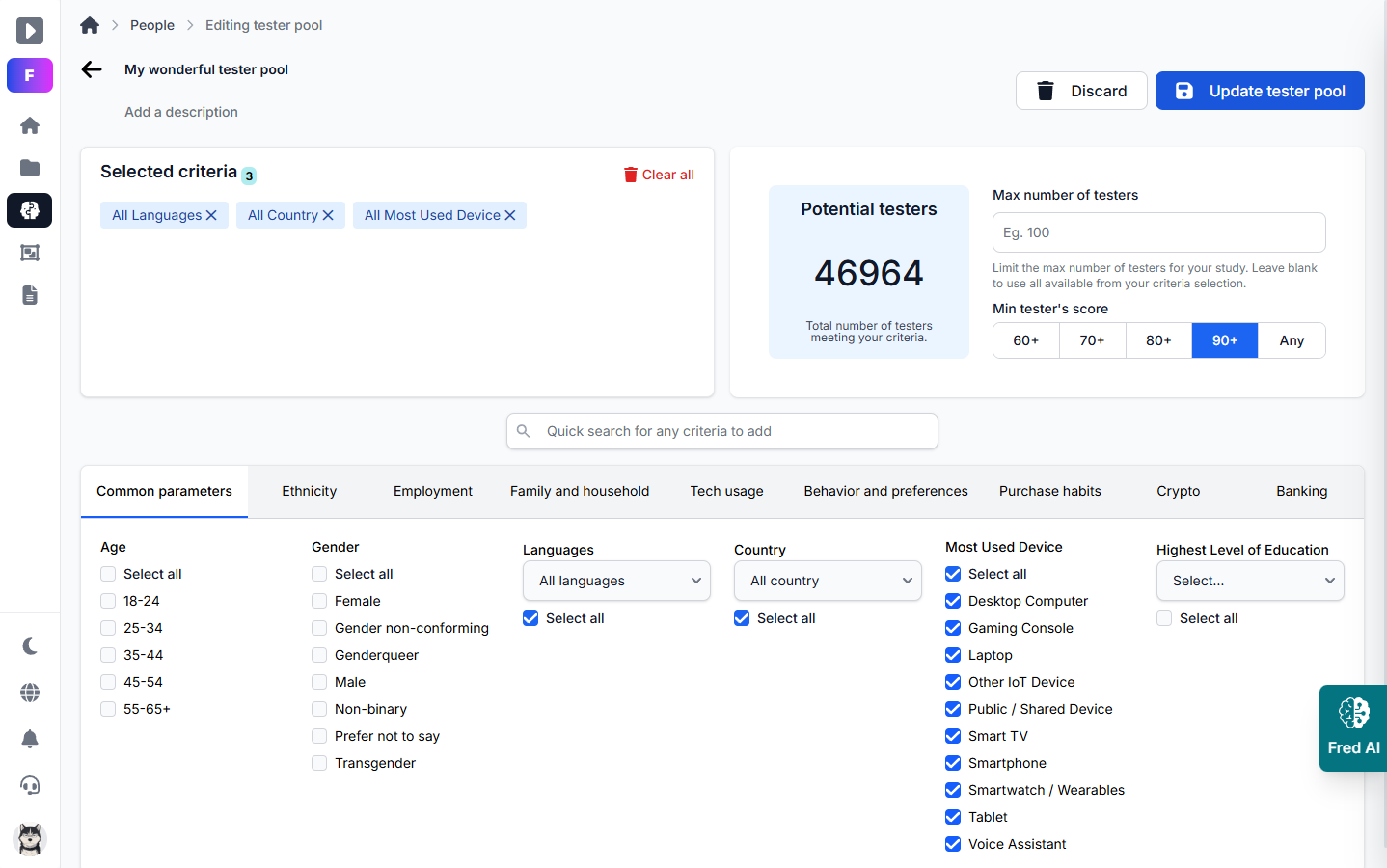
At a glance
What Tester Panel helps teams prove
Tester Panel connects participant sourcing, screening, segment context, and study evidence so teams can recruit faster without weakening audience fit. Instead of treating recruiting as a separate spreadsheet or vendor workflow, Fred keeps criteria, quotas, participant attributes, and study objectives close to the research itself. That matters because a finding is only as credible as the audience behind it: when stakeholders can see who was recruited, why they matched the study, and how segment context shaped responses, the evidence is easier to trust.
Define
Start from the audience criteria the product decision actually depends on.
Qualify
Keep screening criteria, quotas, and participant fit close to study setup.
Carry
Preserve segment context during analysis and reporting so findings are easier to trust.
Recruiting risk
Bad participant fit quietly weakens the whole study.
The audience sounds right, but the evidence feels weak.
Generic recruiting can fill seats quickly while missing the behaviors, needs, or contexts the study actually depends on.
Screening logic gets separated from the study.
Criteria, quotas, and participant notes often live in side tools, so the team later has to reconstruct why each response should count.
The decision window closes before the study fills.
Product teams do not wait forever. When recruiting drags, research either arrives late or gets reduced to a smaller, weaker sample.
Panel workflow
Participant quality should stay visible from sourcing to readout.
Fred treats recruitment as part of the evidence chain. The team can see who was recruited, why they fit, and how that context changes the interpretation of findings.
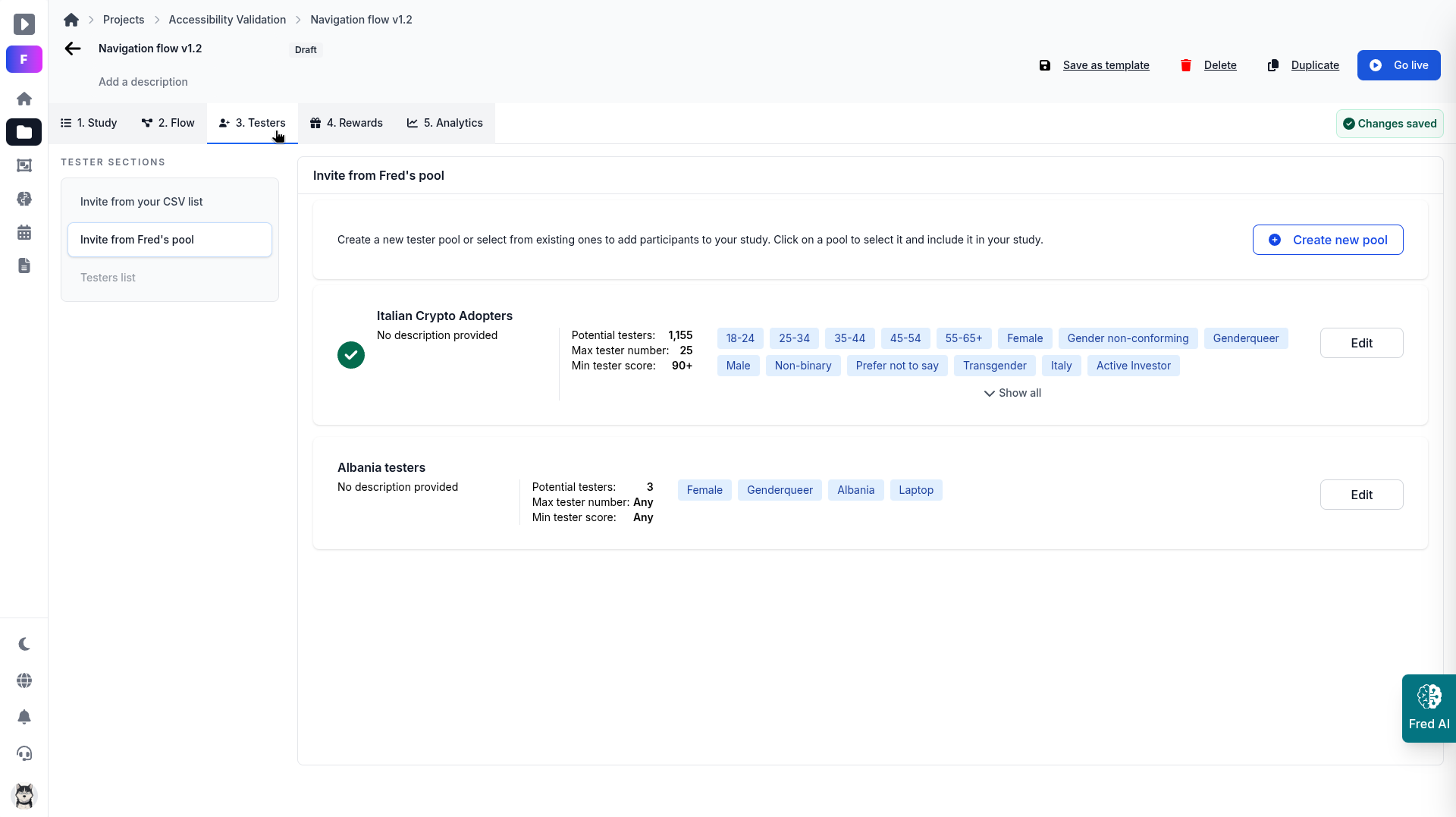
Define
Start from the segment the decision actually needs.
Fred keeps target audience, study objective, and screening criteria close enough that recruitment reflects the product question.
Qualify
Filter for participant fit before evidence enters the study.
Recruiting quality improves when custom criteria and panel sourcing are part of the same research workflow.
Carry
Keep audience context attached during analysis and reporting.
Participant attributes stay useful after collection, so the team can compare segments and defend findings with more confidence.
Study confidence
Faster recruiting only matters when the audience still fits.
The panel is useful because speed and quality travel together: better targeting, tighter launches, and segment context that remains available during analysis.
01
Better segment match
Source participants against the criteria that actually matter for the study.
02
Faster study launch
Fill cohorts quickly enough to keep pace with real product decision windows.
03
Context survives into analysis
Participant attributes remain available when teams review findings and compare segments.
What teams get back
Tighter research cadence and evidence stakeholders trust faster.
When participant context stays connected, teams spend less time defending the sample and more time deciding what the evidence means.
Verified participant sourcing
Better audience fit improves the credibility of the whole study.
Segment comparisons
Review patterns by audience without reconstructing participant context later.
Quality control support
Cleaner participation means less noise when teams interpret results.
More predictable cadence
Faster fill helps studies land inside real product timelines.
Recruit with more confidence
Bring participant sourcing into the place where evidence gets used.
Keep audience fit, launch speed, and participant context inside the same workflow as the study.