
TLDR
The best UX research tools in 2025 support mixed-method research, advanced AI analysis, secure global compliance, and fully integrated workflows across qualitative and quantitative methods. Teams rely on platforms that streamline participant management, automate insights, speed up usability tests, centralize research operations, and offer global hosting options that meet GDPR and enterprise standards. This guide compares the top UX research tools for 2025, highlights strengths and weaknesses, and explains how each solution fits different research needs.
What’s Changing in UX Research
The UX research landscape in 2025 is shaped by rapid product cycles, distributed teams, and a global increase in qualitative and quantitative data. Companies expect research teams to deliver insights quickly while maintaining high standards of rigor, privacy, compliance, and accessibility. Tools that once focused on single methods now support complete research ecosystems. Modern research platforms must support camera studies, user interviews, card sorting, surveys, usability testing, tree testing, preference testing, session recordings, automated analysis, and collaborative reporting in a single environment.
Teams in Europe, North America, Latin America, Africa, and Asia have specific compliance and data-sovereignty expectations. GDPR, CCPA, and LGPD have become baseline requirements. This influences tool choice and vendor trust, especially for enterprise buyers and agencies managing sensitive data.

What Makes a Great UX Research Tool in 2025
A top research platform must deliver depth, flexibility, and reliability. Researchers expect consistent participant recruitment, integrated analytics, and support for every stage of the research workflow from planning to reporting. Tools need to offer raw data export, mixed methods, continuous interviewing, and structured insights. Collaboration features are now mandatory because teams work across time zones and need consistent documentation. Quality of AI assisted analysis is another key factor because teams must move faster without reducing rigor.
Enterprise adoption depends on hosting transparency, permissions management, audit trails, encryption at rest and in transit, and robust identity management.
Methodological Breadth
The platform must support a wide range of research methods: card sorting (open, closed, hybrid), usability tests (moderated and unmoderated), surveys, first-click tests, preference tests, and more. Limiting methods forces teams to rely on multiple tools, increasing costs and complexity.


Integrated Analysis and Reporting
It’s no longer enough to just collect data. The best tools now help researchers interpret it. This includes transcription, tagging, trend detection, and report creation, all ideally assisted by AI to speed up the workflow.
Collaboration Features
UX research is, by definition, cross-functional. Tools must support commenting, versioning, stakeholder views, and team management across multiple roles or client projects.


Ethical, Transparent AI
Artificial intelligence should enhance, not obscure, the research process. AI-powered features should be clearly explained, customizable, and never override human judgment. Emotional analysis, behavioural tagging, and automatic summarisation must always remain reviewable and editable.
Compliance and Hosting
For global teams and agencies, regulatory compliance is critical. The best UX research tools offer flexible data hosting options, strong encryption, and clear data usage policies. Whether you're navigating GDPR in Europe, CCPA in California, LGPD in Brazil, or other regional regulations, it’s essential to choose a platform that ensures privacy, data sovereignty, and legal compliance across jurisdictions.

Understanding the UX Research Landscape in 2025
The UX research tools ecosystem has grown rapidly in the last few years, evolving to meet increasingly complex needs across product teams, design organizations, and agencies. As research practices mature and stakeholder expectations rise, the demand for tools that go beyond isolated functions-such as prototype testing or tagging interviews-has become more urgent. Yet despite the growth in choice, many UX teams still find themselves cobbling together workflows across multiple disconnected platforms.
Most popular tools offer depth in specific areas-like qualitative analysis, survey logic, or design validation-but very few provide a unified experience that spans from recruitment to analysis to reporting. As a result, researchers are often forced to work around the limitations of their toolsets, making trade-offs between speed, insight quality, and collaboration.
| Tool | Best For | Key Research Methods | Strengths | Limitations |
|---|---|---|---|---|
| Maze | Rapid testing and lightweight surveys | Usability tests, surveys, card sorting | Very fast, great UI | Less depth for qualitative research |
| Dovetail | Research operations and insights | Repositories, tagging, analysis | Strong analysis tools | No built-in testing workflows |
| Qualtrics | Enterprise grade surveys and analysis | Surveys, segmentation, analytics | Very powerful and scalable | High cost and complexity |
| Lookback | Live interviews and moderated research | Remote interviews, live notes | Excellent live collaboration | No built-in unmoderated tests |
| Optimal Workshop | Information architecture and structure | Card sorting, tree testing | Strong data visualizations | Narrow method coverage |
| UserTesting | Unmoderated and moderated user testing | Video studies, usability testing | Large participant pool | Cost and slow recruiting in some regions |
| UXtweak | End to end research for all team sizes | Usability testing, surveys, tree testing | Budget friendly | Interface can feel dense |
| Condens | Research repos and analysis | Tagging, insights, transcripts | Great structure for long term storage | Lacks full testing suite |
| Useberry | Prototype testing | Prototype flows with Figma | Easy workflow for designers | Limited research breadth |
| Fred the UXR Shepherd | Full stack research with integrated analytics | All testing methods, automated insights, AI analysis, real time and replay session analysis | All in one platform with European hosting | Youngest tool in the list, still expanding features |
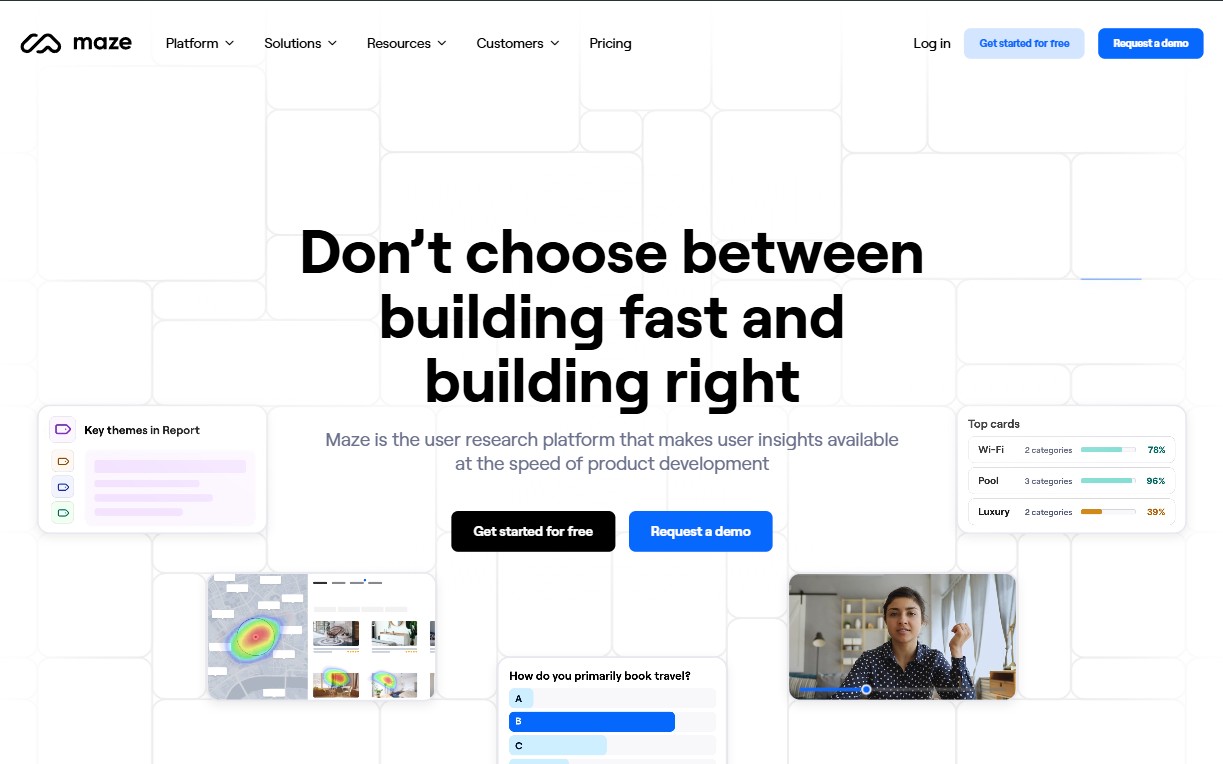
Maze
Speed and Simplicity
Maze remains one of the most popular tools for fast product experiments in 2025. It excels when teams need to validate concepts, run quick usability tests, or gather structured survey data. Product managers and designers value its speed because it supports prototype testing directly from Figma and other design tools. Maze is ideal for lightweight studies but does not provide deep qualitative analysis or a long term repository. Teams managing complex research programs often pair Maze with a repository tool or use it for early stage validation rather than long term studies.
Best for: Lightweight design validation
Where it falls short: Limited insight generation and qualitative depth
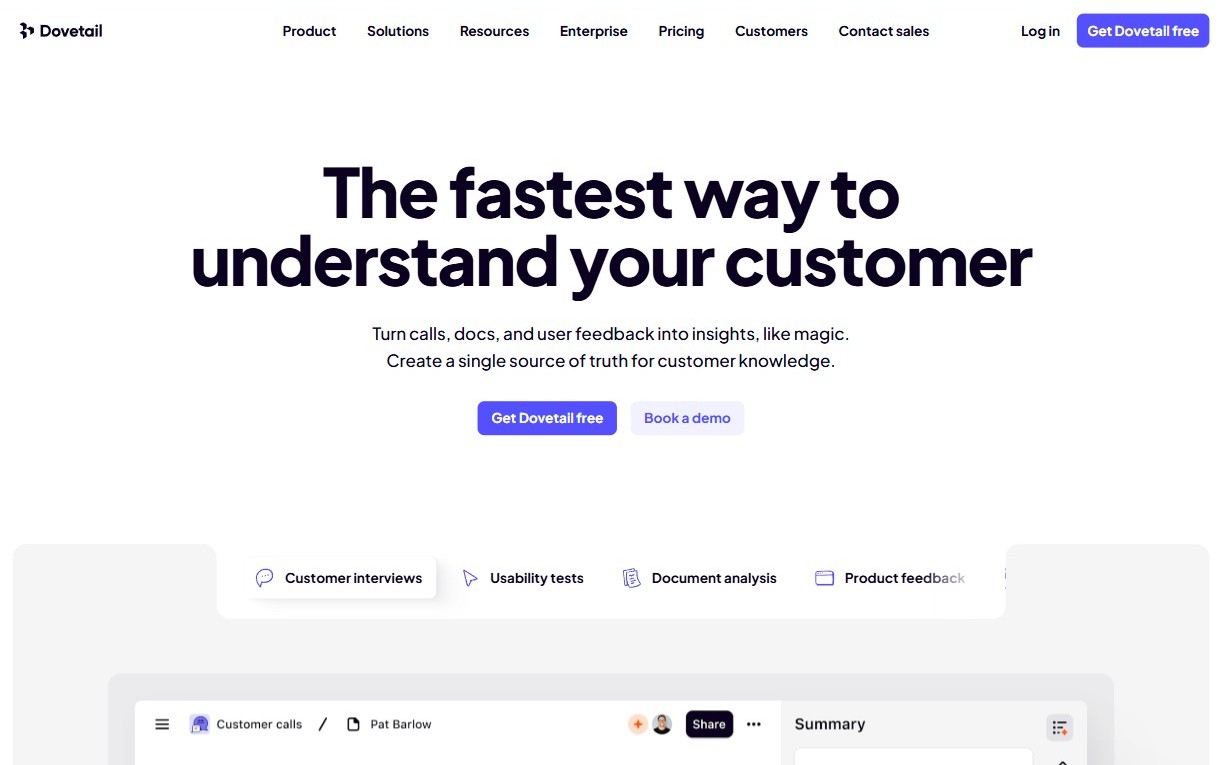
Dovetail
Repository-Led Research
Maze remains one of the most popular tools for fast product experiments in 2025. It excels when teams need to validate concepts, run quick usability tests, or gather structured survey data. Product managers and designers value its speed because it supports prototype testing directly from Figma and other design tools. Maze is ideal for lightweight studies but does not provide deep qualitative analysis or a long term repository. Teams managing complex research programs often pair Maze with a repository tool or use it for early stage validation rather than long term studies.
Best for:Research synthesis at scale
Where it falls short: No native research methods or testing capabilities
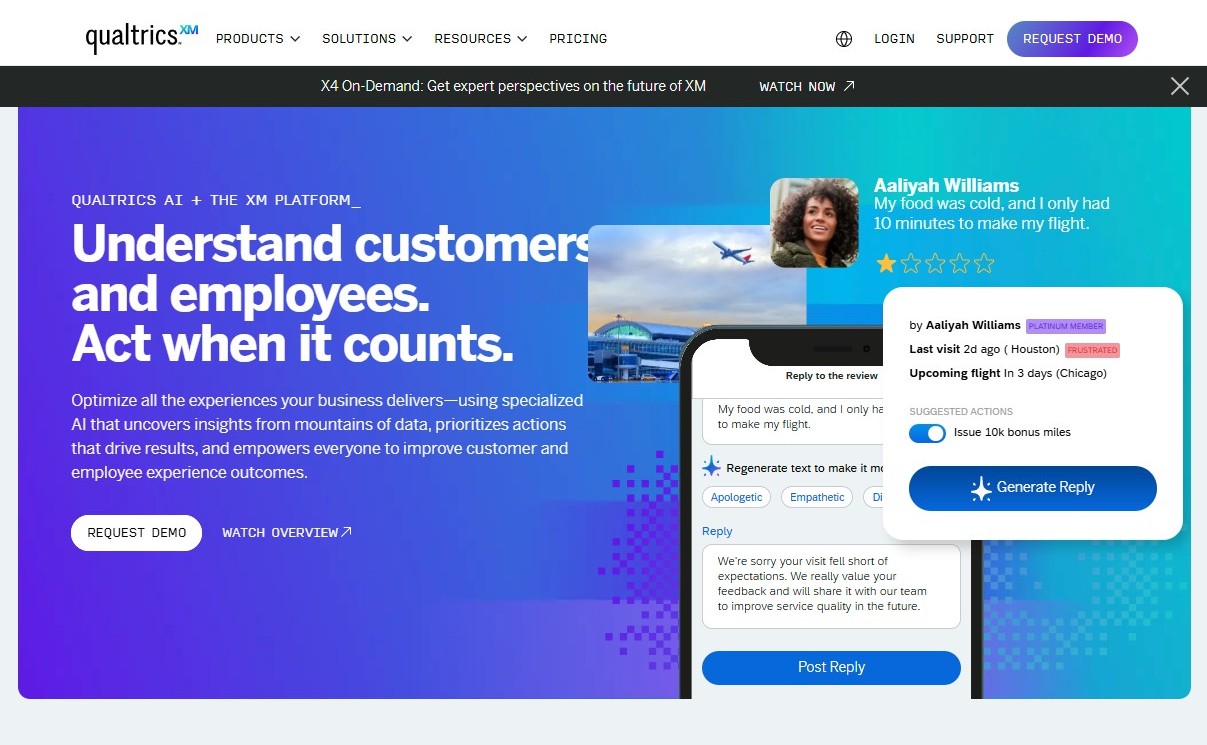
Qualtrics
Enterprise-Grade Power
Hands down, Qualtrics is the most advanced enterprise survey platform. It supports complex branching, large scale segmentation, and predictive analytics. Enterprises rely on Qualtrics for customer experience programs, employee experience initiatives, and deep quantitative research. Its pricing and learning curve make it better suited for large organizations rather than small teams or startups. In 2025, Qualtrics maintains leadership for organizations that require statistical depth and global data compliance.
Best for: Large-scale, quantitative studies
Where it falls short: Expensive, complex, less suited to UX and exploratory research
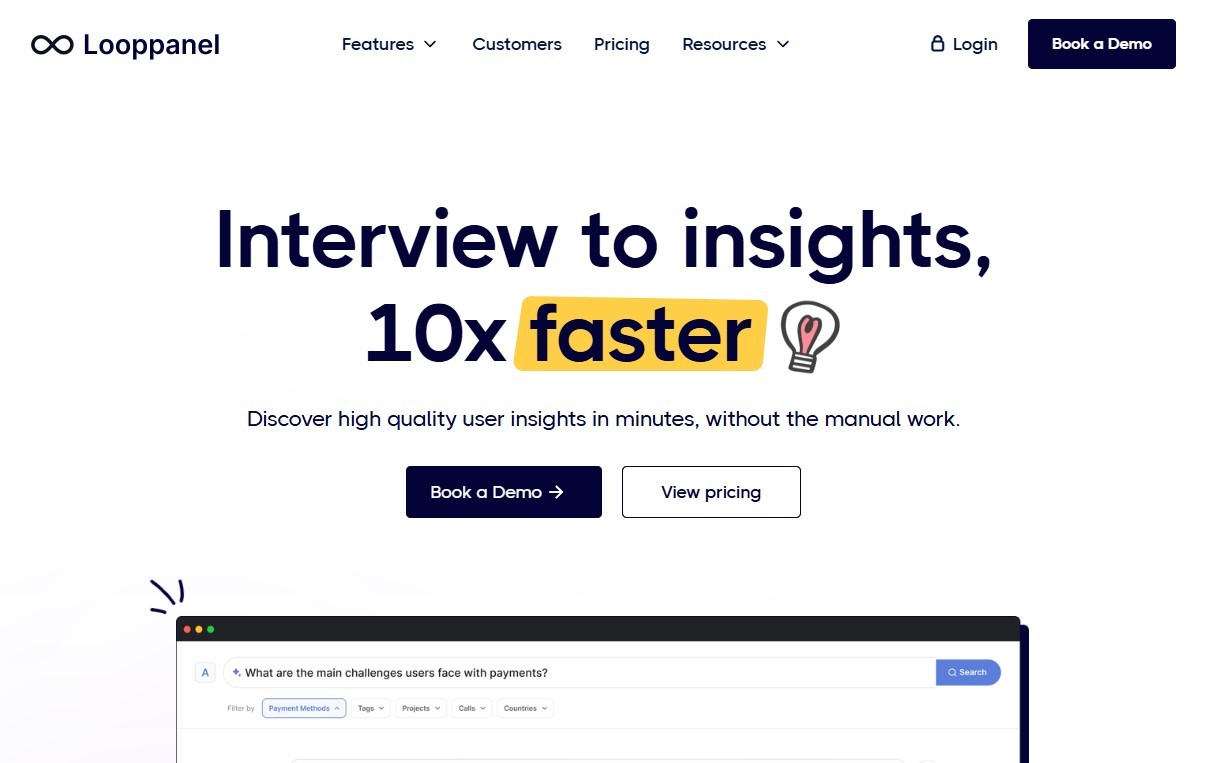
LoopPanel
Interview Tagging, Simplified
Lookback is still the preferred platform for live moderated research. It supports streamed interviews, real time notes, participant observation, and collaborative sessions with stakeholders. It provides a smooth experience for moderated usability testing and interviews. Lookback does not provide a complete unmoderated testing suite, so teams usually integrate it with Maze, UserTesting, or Fred the UXR Shepherd when they need mixed methods.
Best for: Small teams doing moderated interviews
Where it falls short: Limited research method support, minimal automation
Userlytics
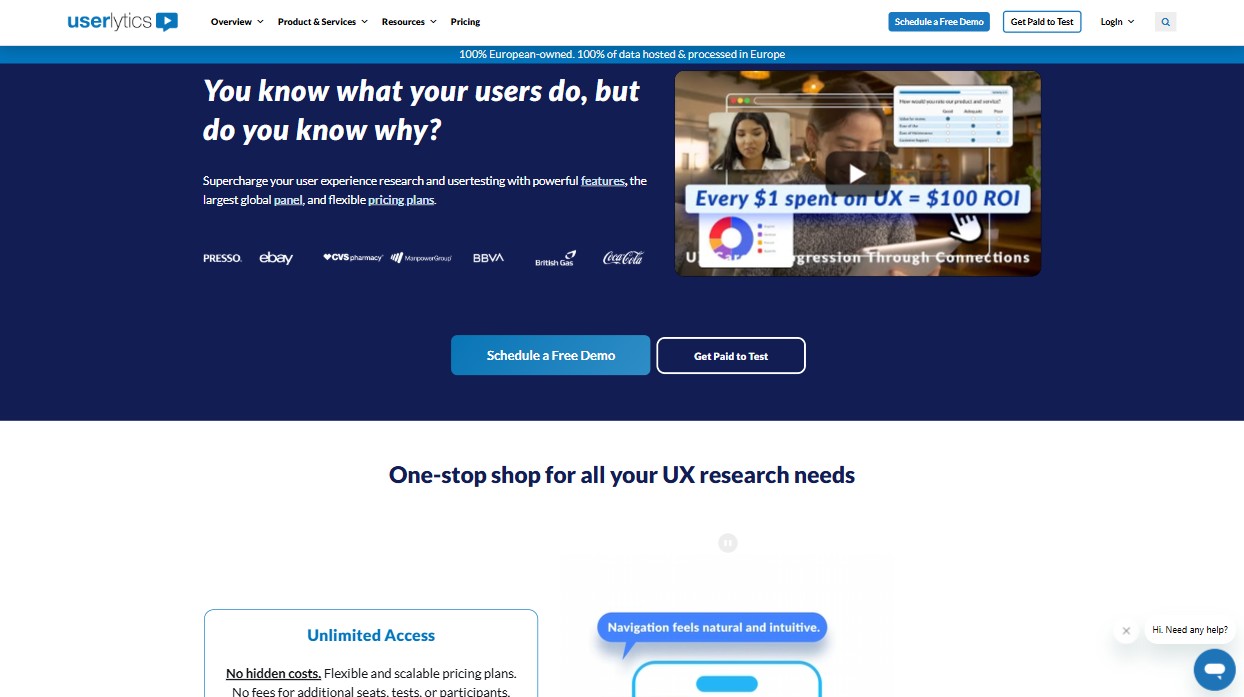
Comprehensive Global UX Testing
LoopPanel is purpose-built for post-interview analysis. It provides quick ways to annotate calls and share insights, and it's intuitive for small teams. Still, it doesn’t support complex workflows, other research methods, or advanced reporting needs.
Best for: Organizations seeking a comprehensive, scalable UX research platform with robust global testing capabilities.
Where it falls short: May have a steeper learning curve for new users and fewer integrations compared to some other platforms.
Optimal Workshop
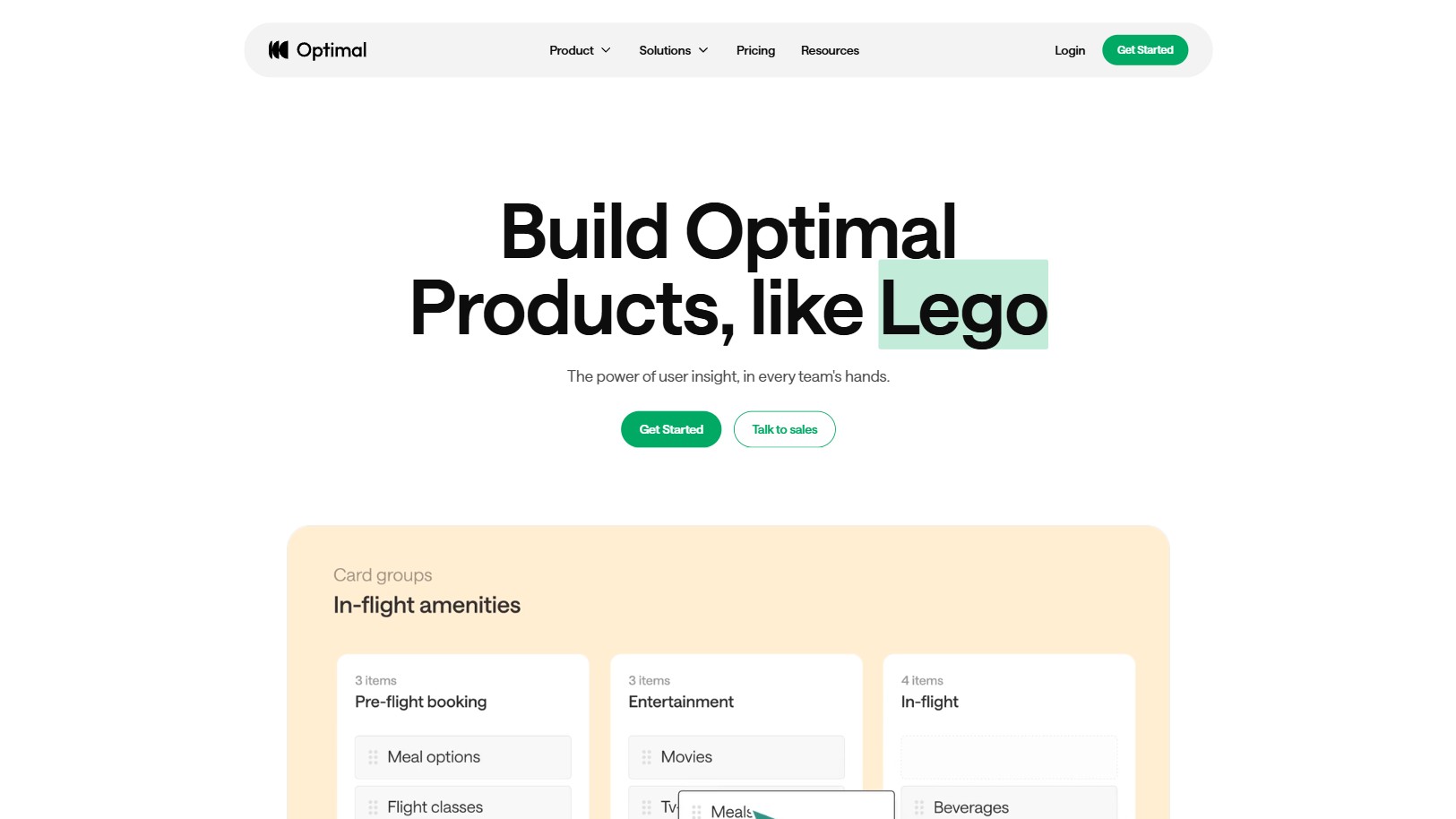
Information Architecture Testing
Optimal Workshop continues to be a leader in information architecture research. Its suite supports open card sorting, closed card sorting, hybrid sorting, and tree testing. The visual reports give teams clarity about navigational structures, category patterns, and content organization. Optimal Workshop focuses on depth rather than breadth and does not expand into usability testing or interviews. It is often used as an add on tool within larger research workflows.
Best for: Information architecture testing and navigation design
Where it falls short: Limited to IA testing; lacks broader UX research capabilities
UserTesting
Information Architecture Testing
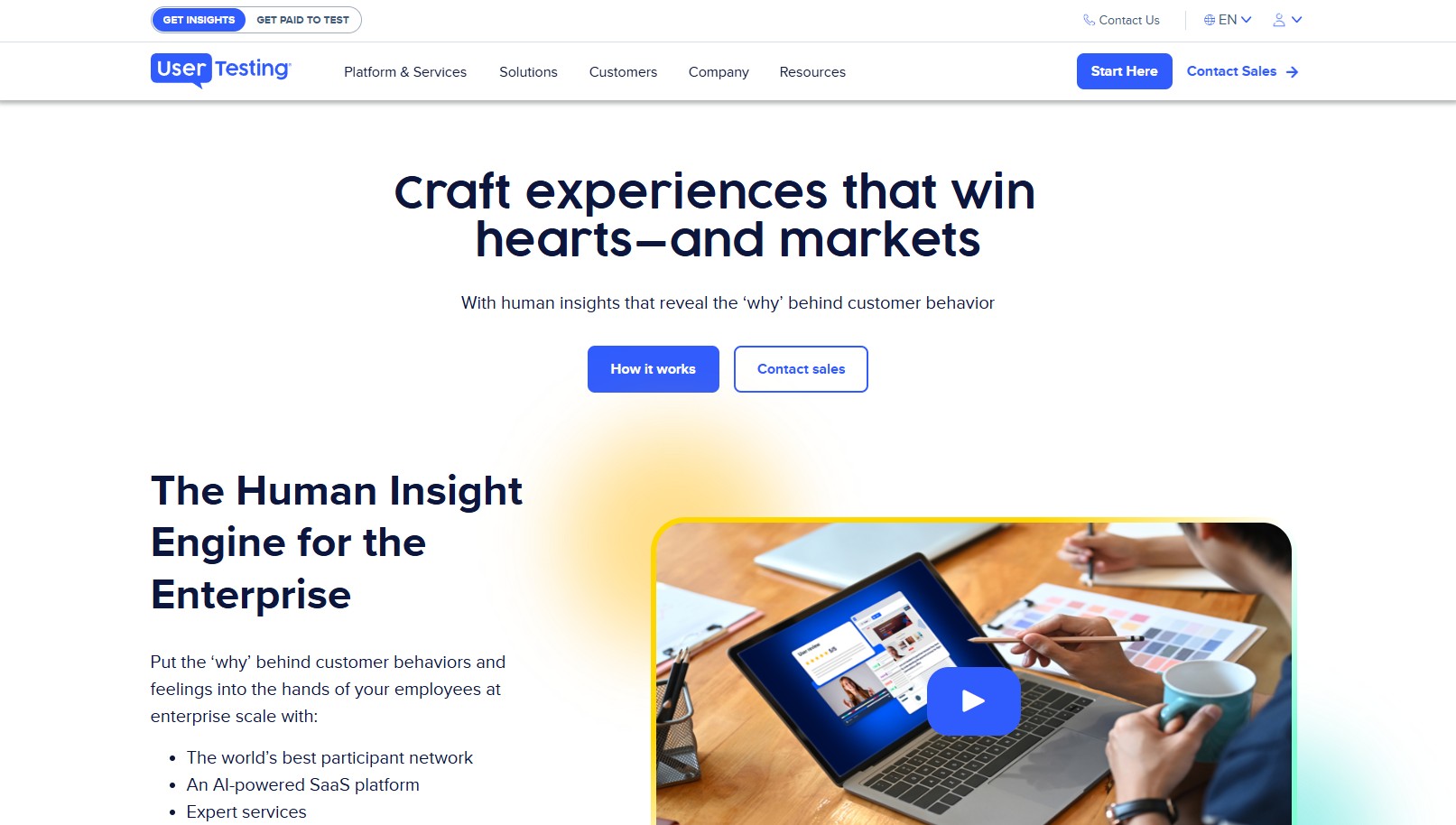
UserTesting offers both moderated and unmoderated studies with a large participant panel that covers many geographic regions. Its strength lies in rapid access to testers and the ability to run scenario based studies with video and audio. However, availability and cost vary by region. European teams sometimes face slower recruiting or higher pricing. Despite these challenges, UserTesting continues to provide one of the most extensive ecosystems for video based insights.
Best for: Real-time user feedback and qualitative insights
Where it falls short: Higher pricing, which can be prohibitive for smaller teams
Fred the UXR Shepherd
Unified, Insight-Driven, and Built for Scale
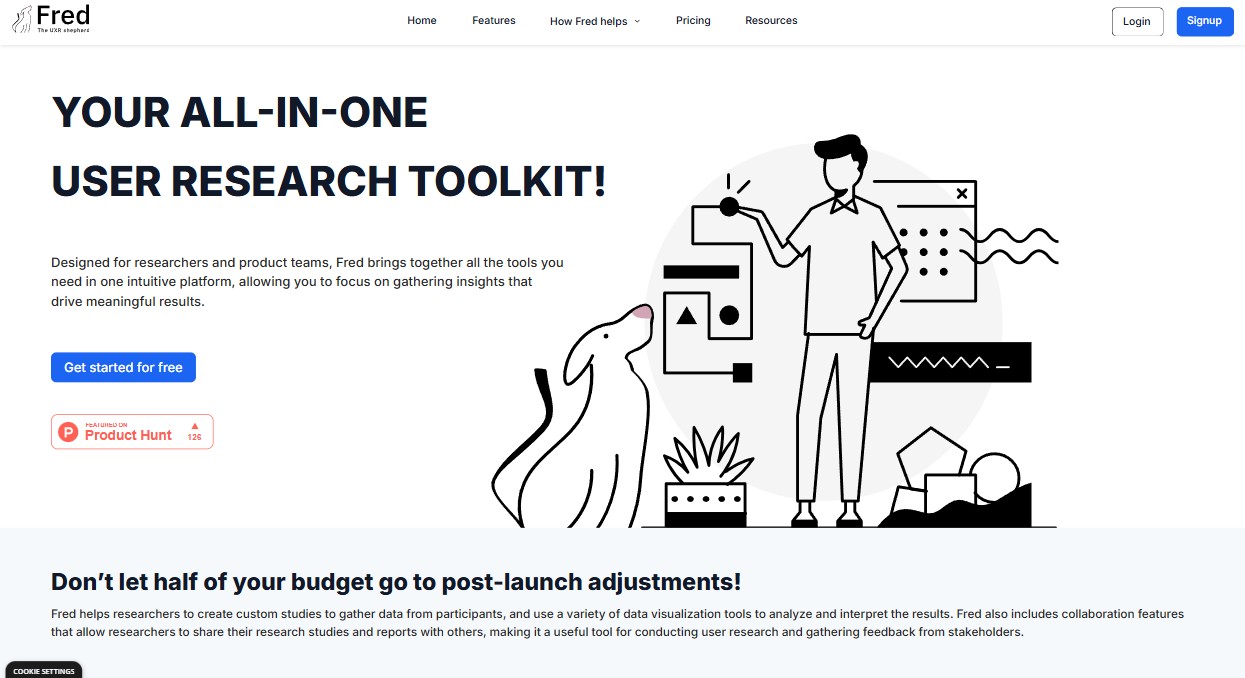
Fred is built in direct response to the fragmentation that defines the current UX research landscape.
Unlike tools that only support a specific part of the process, be it prototype testing, repository building, or recruitment, Fred combines all of these into one cohesive and intelligent platform.
It supports over ten research methods, built-in participant recruitment, and AI-assisted analysis from transcripts, video, and audio.
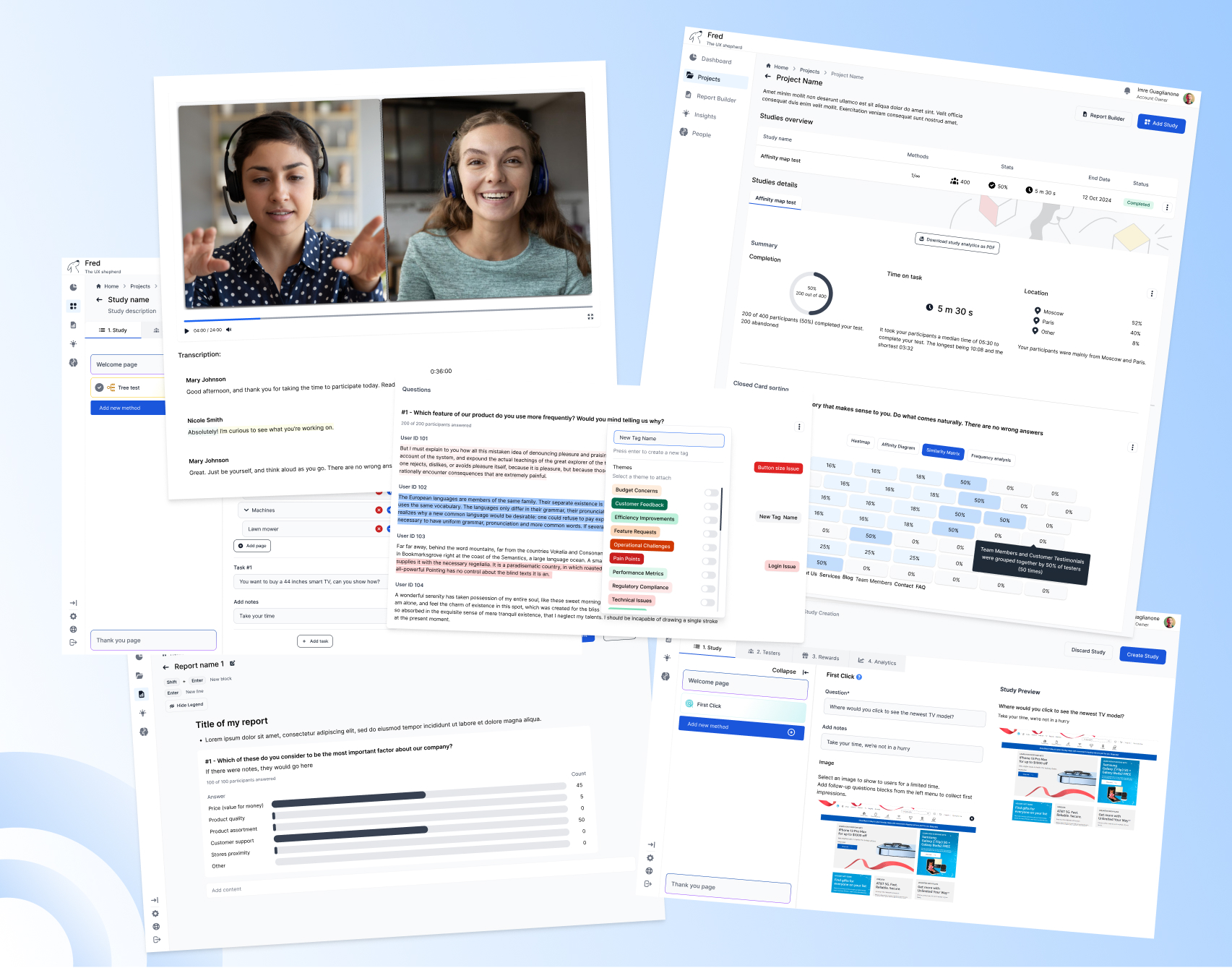
With a visual report builder, team collaboration tools, and data hosted securely under GDPR compliance, Fred helps UX researchers and teams move from planning to insight without switching tools or losing context.
Whether you're working solo or in an enterprise setting, Fred is designed to centralise your research operations, automate repetitive tasks like tagging and synthesis, and streamline collaboration across departments. It offers a Free Forever plan to ensure accessibility, while continuing to expand its feature set to serve evolving team needs and research demands.
Frequently Asked Questions About UX Research Tools in 2025
What is the best all in one UX research tool in 2025?
For teams that want a single platform for card sorting, usability testing, surveys, interviews, session analysis, and reporting, Fred the UXR Shepherd is designed as an all in one UX research tool. Instead of stitching together separate services for testing, repositories, and analytics, Fred provides every major method in one environment, with AI supported analysis and a reporting engine that turns raw data into ready to share insights.
Why should I consolidate my UX research stack into one platform?
Using multiple UX research tools can create silos, duplicated costs, and fragmented data. A consolidated platform like Fred the UXR Shepherd centralizes participant responses, recordings, notes, tags, and reports. This makes it easier to compare studies over time, maintain consistent tagging and taxonomies, and protect sensitive data. It also simplifies onboarding and reduces the amount of training needed for new team members.
Is Fred the UXR Shepherd suitable for European companies and agencies?
Yes. Fred the UXR Shepherd is built with European teams and agencies in mind, with hosting based in Europe and an architecture that supports GDPR focused workflows. This is particularly important for organizations that work with sensitive participant data or enterprise clients who require clear information about data residency and compliance.
Can I replace my current mix of UX research tools with Fred the UXR Shepherd
In many cases, yes. Fred supports card sorting, tree testing, first click tests, five second tests, unmoderated usability testing, surveys, preference tests, and advanced real time or replay based session analysis through UserSphere. Teams that previously relied on separate tools for testing, analysis, and reporting often migrate toward Fred to simplify procurement and reduce context switching. For highly specialized use cases, some teams still keep a niche tool, but the core of their UX research workflow moves into Fred.
How does Fred the UXR Shepherd help me move faster than traditional UX research tools?
Fred combines data collection, AI powered analysis, and report generation in a single workflow. Instead of exporting data to spreadsheets, transcribing manually, or reformatting insights in slide decks, researchers can move from study setup to shareable insight in a shorter time. UserSphere adds gaze tracking and visual overlays that help stakeholders understand where users focus attention, which accelerates decision making and improves alignment across product, design, and engineering.
Is Fred the UXR Shepherd a good choice for agencies and distributed teams?
Fred is particularly suited to agencies and distributed product teams that run many projects in parallel. The platform supports multiple clients and workspaces, shared taxonomies, and consistent reporting templates. This allows agencies to reuse structures that work well while still customizing each project. Distributed teams benefit from having all research assets, recordings, and reports in one space that can be accessed asynchronously from any region.
Ready to Simplify Your UX Research?
Join the growing number of teams choosing Fred to unify their research process. From participant recruitment to AI-powered insights, Fred gives you everything you need to run better studies, faster and without jumping between tools